Address
304 North Cardinal
St. Dorchester Center, MA 02124
Work Hours
Monday to Friday: 7AM - 7PM
Weekend: 10AM - 5PM
Address
304 North Cardinal
St. Dorchester Center, MA 02124
Work Hours
Monday to Friday: 7AM - 7PM
Weekend: 10AM - 5PM
If you’ve ever pulled on a comfortable t-shirt, a soft pair of leggings, or a classic polo, you’ve likely experienced jersey knit cotton. It’s one of the most ubiquitous and versatile fabrics in modern apparel, yet its specific characteristics are often misunderstood. This guide moves beyond the basic label to explain what jersey knit cotton truly is, how its construction dictates its behavior, and what you should consider when selecting or sourcing it for a project, whether you’re a small designer, a brand manager, or a DIY enthusiast.
The term “jersey” refers to a specific knitting structure, not the fiber content. When combined with cotton—a natural cellulose fiber—the result is a fabric prized for its softness, breathability, and drape. However, not all jersey is created equal. Variations in yarn quality, knitting tension, and finishing treatments create a wide spectrum of performance, feel, and durability. Understanding these nuances is key to choosing the right fabric for the job and avoiding common pitfalls like unexpected shrinkage or premature pilling.
The fundamental difference between a woven fabric (like poplin or denim) and a knit fabric (like jersey) lies in how the yarns are interlaced. Weaving creates a rigid, crisscross structure with warp and weft yarns. Knitting, by contrast, forms interlocking loops of a single yarn. This looped structure gives jersey its signature stretch and recovery, especially in the width (cross-grain) direction. This inherent elasticity is why jersey feels so comfortable against the body and allows for freedom of movement without the need for added stretch fibers like spandex.
Key mechanical outcome: A plain jersey knit will have significant stretch across the grain (typically 20-50% or more) and minimal stretch lengthwise. This anisotropic stretch (stretching more in one direction) is crucial to remember during pattern design and garment construction. Patterns must account for this stretch to avoid distortion or discomfort.
Visualizing the jersey stitch helps explain its properties. Each new loop is pulled through the previous loop. The side of the fabric where the loops form vertical rows is called the face or technical face. It typically shows a smooth, vertical line pattern. The reverse side, where the loop ends create a bumpy texture, is the back or technical back. In a standard single jersey, these two sides look and feel distinctly different. This structure, while simple, is inherently less stable than a woven fabric and is prone to curling at the edges (the face curls inward, the back outward) if not properly finished or stabilized.
“Jersey” is a family of knit structures. The most common types you’ll encounter in cotton are:
| Feature | Single Jersey | Interlock (Double Jersey) |
|---|---|---|
| Construction | One knit layer | Two interlocked knit layers |
| Weight/Thickness | Light to medium | Medium to heavy |
| Stability & Curl | Low stability, prone to edge curl | High stability, minimal curl |
| Reversibility | No (face/back are different) | Yes (both sides are smooth) |
| Drape | Soft, fluid | Firmer, more structured |
| Typical Use | T-shirts, loungewear, basics | Polo shirts, heavier tees, infantwear |
When selecting a jersey, don’t just look at the fiber content. The final fabric performance is a product of several intertwined factors.
Even the best cotton jersey has limitations. Pilling—the formation of small balls of tangled fibers on the surface—is a natural result of abrasion and friction. Looser, lower-twist yarns and shorter cotton staples (like standard upland cotton) will pill more readily. While no cotton jersey is completely pill-proof, higher-quality ring-spun combed cotton will resist pilling significantly longer.
Shrinkage is another certainty with natural fiber knits. Even “pre-shrunk” fabrics can shrink 3-5% in home laundering if not washed and dried correctly. This must be accounted for in pattern grading and sample testing.
Finally, stability is a relative term. A single jersey will distort more under tension during sewing and wear than an interlock. Using the correct needle (ballpoint or jersey/stretch needle) and stabilizing seams with appropriate techniques (like a narrow zigzag or a serger) is non-negotiable for professional results.
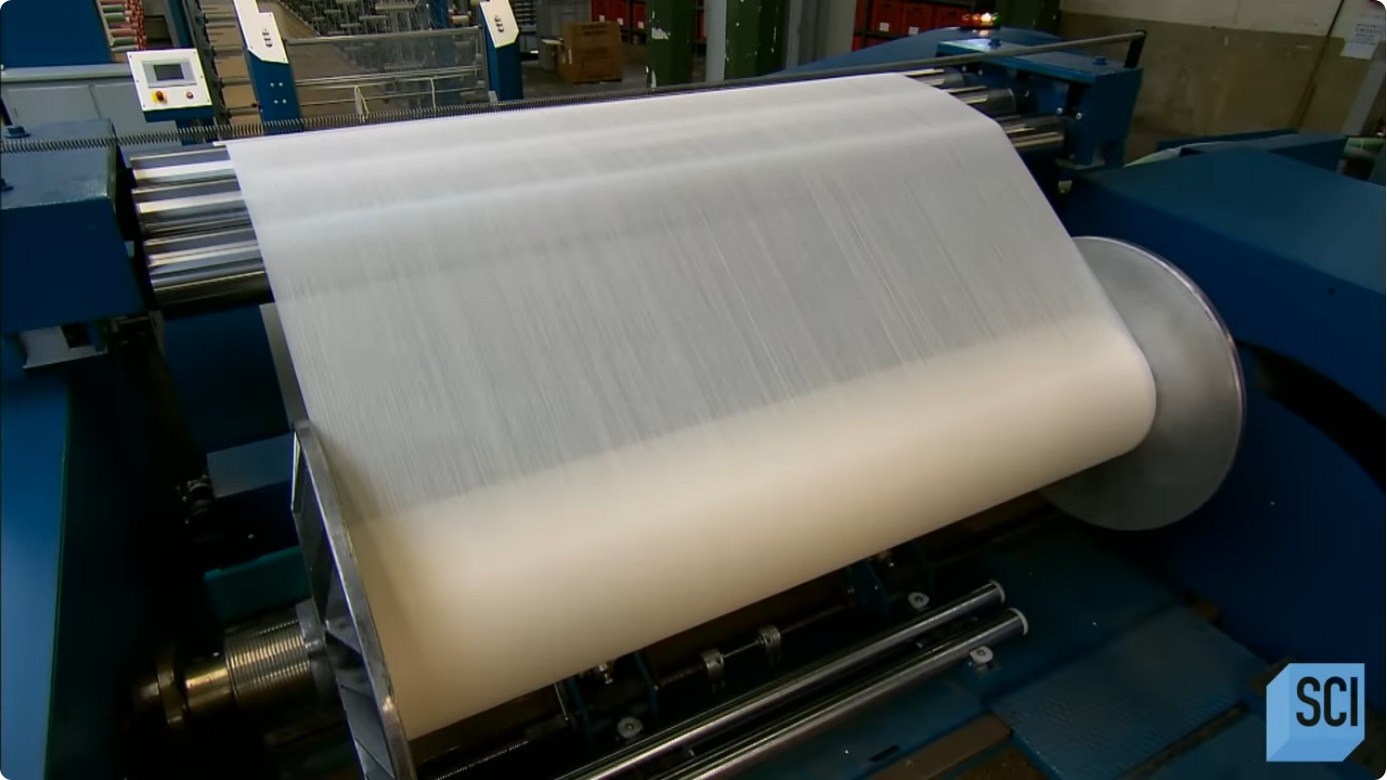
Whether you’re buying from a local textile merchant or an online wholesale platform, a systematic approach prevents costly mistakes.
You may also like: Stretchy Fabric Material: A Practical Guide to Types, Performance, and Sourcing
When buying wholesale, fabric is sold by the yard or meter from a bolt. Minimum order quantities (MOQs) vary widely, from 5 yards for sample packs to 500+ yards for production runs from many overseas mills. Domestic converters and jobbers often have lower MOQs and faster lead times but a more limited catalog.
Jersey’s comfort and ease of care make it a default choice for many categories. Its selection should be deliberate, however.
Choosing jersey knit cotton involves balancing cost, hand, performance, and longevity. A cheaper, carded single jersey might be fine for a promotional giveaway but will likely pill and feel rough after a few washes. A combed, ring-spun interlock, while more expensive upfront, will provide a superior wearing experience and hold its shape longer, representing better value for a core product line.
Before you finalize a fabric decision, ask yourself:
Jersey knit cotton remains a cornerstone of the apparel world for good reason. Its simplicity is deceptive; the true art lies in selecting the precise variant—the right cotton, the right knit structure, the right finish—that transforms a generic t-shirt into a garment that performs, feels, and lasts as intended.