Address
304 North Cardinal
St. Dorchester Center, MA 02124
Work Hours
Monday to Friday: 7AM - 7PM
Weekend: 10AM - 5PM
Address
304 North Cardinal
St. Dorchester Center, MA 02124
Work Hours
Monday to Friday: 7AM - 7PM
Weekend: 10AM - 5PM
When you hear “stretch printed fabric,” it’s easy to picture a simple graphic on a elastic material. But in practice, it’s a engineered textile system where the base fabric’s mechanical properties and the applied decoration must coexist without compromising function. Misunderstanding this interplay leads to cracked logos, baggy knees, and disappointed customers. This guide cuts through the ambiguity, breaking down how these fabrics are made, where they excel, where they fail, and what you must verify before committing to a bulk order. We’ll move beyond generic descriptions to the specific tradeoffs that determine whether a fabric is suitable for a high-performance sports bra or a decorative fashion skirt.
Quick reality check: “Stretch printed fabric” is not a fiber or a specific weave. It is a description of a finished textile that has two core characteristics: 1) it incorporates elastic yarns (like spandex/Lycra®) to provide recovery and mobility, and 2) a color or pattern has been applied to its surface via a printing process. The performance of the final garment hinges entirely on the compatibility between the knit structure, the elastomeric content, and the printing method used. A poor match in any of these areas can render a supposedly “stretch” garment stiff, brittle, or short-lived.
Before the ink even touches the material, the substrate—the knit fabric itself—dictates the ceiling for performance. The two primary categories are single knits (like jersey) and double knits (like interlock or rib). Their construction determines stretch direction, recovery, and durability.
Helpful tip: Heavyweight Sweatshirt Fabric: A Practical Guide for Designers and Buyers
Single Jersey: The most common and economical. It stretches more in one direction (typically width) and can be prone to curling at edges. Printing on single jersey is straightforward, but the fabric’s tendency to distort under tension means registration (alignment of multi-color prints) can be challenging for detailed patterns.
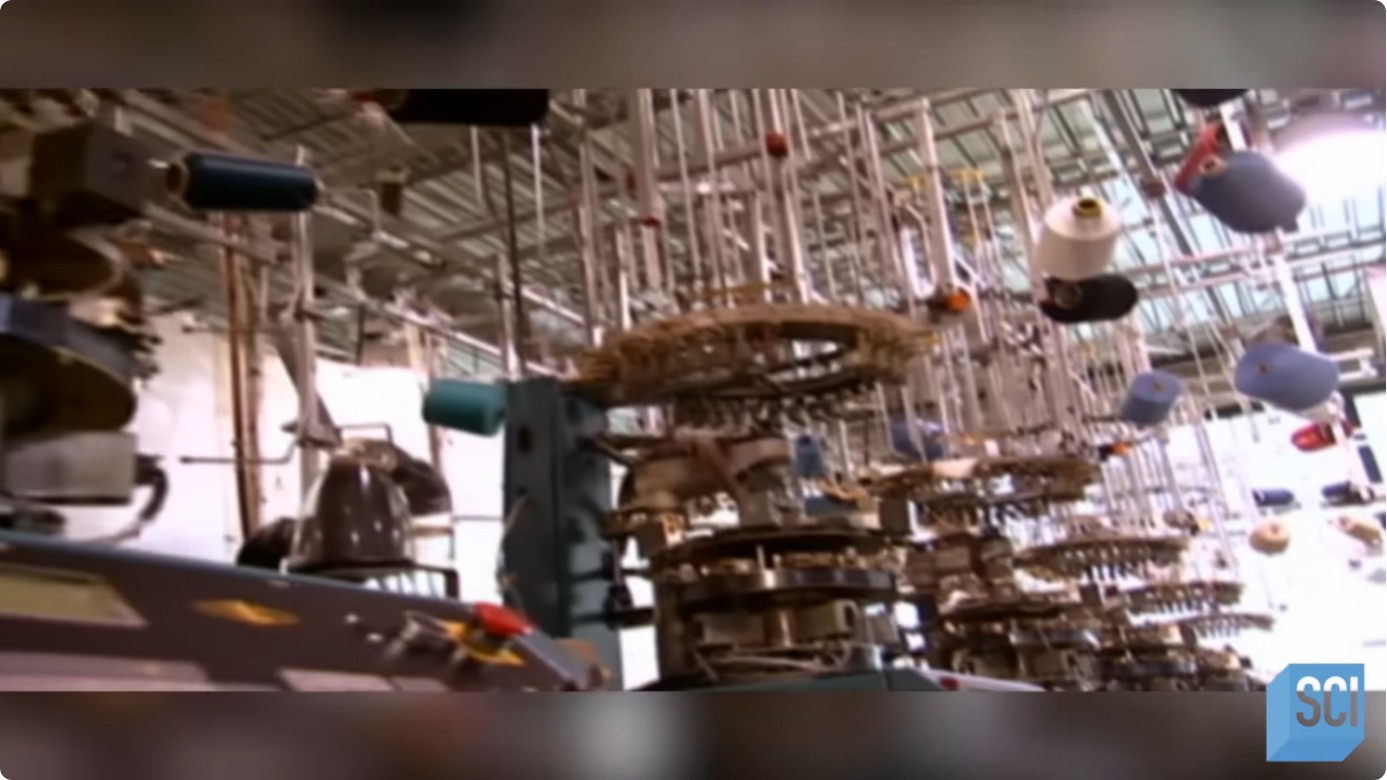
Interlock Knit: A double-layer fabric where two single jerseys are interwoven. It is more stable, less prone to curling, and offers balanced stretch in both directions. This stability makes it a preferred choice for high-precision digital printing and for garments requiring consistent fit, like t-shirts and leggings.
Rib Knit (1×1, 2×2): Features vertical ribs and excellent recovery, especially in the width direction. It’s the go-to for cuffs, waistbands, and form-fitting activewear. However, the pronounced texture can interfere with fine detail in printing, making it better suited for bold, large-scale graphics or all-over sublimation.
The elastomer content—usually spandex—is critical. Common blends are 95% cotton/5% spandex or 80% polyester/20% spandex. A higher spandex percentage increases stretch and recovery but also increases cost and can make the fabric more sensitive to heat and chemicals during subsequent processing.
The printing technique is the second pillar. Each method interacts differently with the stretch fibers, affecting hand feel, durability, and design complexity.
| Method | Process Essence | Best For | Impact on Stretch | Key Limitation |
|---|---|---|---|---|
| Dye Sublimation | Solid ink turns to gas under heat, bonding with polyester fibers. | All-over, seamless patterns; photorealistic prints. | Minimal. Ink becomes part of the fiber, no raised ink layer. | Works only on light-colored, polyester-rich fabrics (typically >60% polyester). |
| Digital Inkjet | Piezo or thermal printheads spray aqueous ink directly onto fabric. | Short runs, complex multi-color designs, prototypes. | Moderate. Ink sits on surface; a heavy layer can stiffen the area. | Ink may crack if the substrate is stretched beyond its recovery limit during wear. Requires pre-treatment. |
| Screen Printing | Ink pushed through a mesh stencil onto fabric. | Bold, solid-color logos and graphics; high-volume runs. | Significant. Thick plastisol or water-based ink creates a rigid film that restricts local stretch. | High ink deposit can severely hamper elasticity and cause cracking at stress points. |
| Heat Transfer Vinyl (HTV) | Cut vinyl design applied with heat and pressure. | Simple lettering, numbers, small logos. | Severe. Vinyl is a non-stretch polymer film that acts as a bond-over. | Very poor stretch recovery across the vinyl area; prone to cracking and peeling. |
For a stretch garment to perform, the print must move with the fabric. Sublimation wins here because the dye is molecularly bonded within the polyester fibers, not sitting on top. Screen prints and HTV are essentially a rigid patch on a flexible substrate, creating a “stress riser” where the material will inevitably fail under repeated strain.
Choosing a stretch printed fabric involves balancing several competing factors. A decision that optimizes one property often degrades another.
A tight-knit, high-spandex fabric has excellent recovery but a less open structure. This can limit ink absorption for screen printing, leading to incomplete coverage. Conversely, a looser knit holds ink better but may have poorer recovery and a less smooth hand. For intricate photorealistic prints, a stable, fine-gauge interlock with a moderate spandex content (e.g., 92% polyester/8% spandex) is often the optimal compromise.
Heavier ink deposits (common in screen printing for bold opacity) provide colorfastness but create a stiff, rubbery patch that doesn’t stretch. This is unacceptable for fitted activewear but may be tolerable for a loose-fitting fashion tee. A soft-hand water-based screen print or a digital print with minimal ink laydown will feel better but may have lower abrasion resistance.
Elastomeric fibers are thermoplastic. Excessive heat during printing (especially in screen printing curing ovens or HTV application) can degrade spandex, causing it to lose its elastic memory. The garment will then stretch out permanently. Any supplier must provide the maximum safe curing temperature for their specific fabric blend. This is a non-negotiable data point for quality control.
Different end-uses have vastly different tolerance for print-related stiffness and stretch compromise.
Ordering stretch printed fabric wholesale requires a proactive, investigative approach. Never rely solely on a swatch that may not represent full-production conditions.
Ask your supplier these specific questions:
Conduct your own tests on received fabric:
Even the best stretch printed fabric has inherent vulnerabilities that must be communicated to the end-user.
Use this flow to avoid common pitfalls.
If your project requires high elasticity and a complex print on a dark color, you may be facing an impossible combination with conventional methods. Alternatives include: using a stretch woven fabric with a print (less stretch but better detail), employing a jacquard knit where the pattern is built into the structure (no printing, maximum stretch), or using a heat-applied stretch film (a specialized, niche product).
Stretch printed fabric is a sophisticated composite, not a simple commodity. Its success depends on the symbiosis between a well-engineered elastomeric knit and a print process that respects, rather than restricts, that inherent mobility. The lowest-cost option is often the most expensive in the long run if it leads to cracked logos and returned goods. By asking precise technical questions, conducting simple physical tests, and aligning the material choice with the garment’s true functional demands, you can move from hoping a fabric will work to knowing it will perform. The key is to treat the print not as a decoration added to a stretch fabric, but as an integral, load-bearing component of a stretch system.
Can I screen print on nylon/spandex?
It is possible but high-risk. Nylon has a lower melting point than polyester, and screen print curing ovens often exceed safe temperatures. Special low-cure inks and extreme temperature control are mandatory. Sublimation does not work on nylon.
Why does my printed leggings feel stiff at the logo?
This is almost certainly due to a heavy screen print deposit or the use of HTV. The ink film does not stretch, creating a rigid patch. For soft-feel logos on stretch garments, sublimation (on polyester) or a very light digital print is required.
Is there a “best” stretch printed fabric for all-purpose t-shirts?
For a standard fashion tee that doesn’t require athletic performance, a 95% cotton/5% spandex jersey with a water-based screen print offers a good balance of comfort, softness, and graphic opacity. For a premium, soft-hand feel with complex art, a polyester-rich jersey with sublimation is superior but more expensive.
How do I verify if a fabric truly has “4-way stretch”?
Take a 4×4 inch square. Pull it diagonally (from corner to corner) and then vertically/horizontally. Measure the elongation percentage. A true 4-way stretch knit will stretch significantly in both directions. A single jersey may stretch 30% width-wise but only 10% length-wise.
What standards govern stretch recovery?
Look for testing according to ASTM D2594 (Standard Test Method for Stretch Properties of Knit Fabrics). This measures elastic recovery after a specified stretch and time. A high-quality performance fabric will show over 90% recovery.
Related guide: The Essential Guide to Lightweight Jersey Fabric: Properties, Uses, and Sourcing




