If you’ve ever felt the satisfying hug of a perfect pair of jeans, the effortless pull-on of a fitted t-shirt, or the supportive stretch of athletic wear, you’ve experienced the magic of cotton lycra cloth. This ubiquitous fabric is the unsung hero of modern wardrobes, blending the timeless comfort and breathability of cotton with the revolutionary elasticity of elastane (commonly known by the brand name Lycra or Spandex). But not all cotton lycra is created equal. The specific blend, construction, and quality determine whether a garment will feel like a second skin or a disappointing, baggy mess after a few wears. Understanding this fabric is essential for designers, sellers, and any consumer who wants to make informed choices about the clothes they live in.
This guide cuts through the marketing buzzwords to deliver a practical, in-depth look at cotton lycra cloth. We’ll explore how it’s made, decode the technical specs that matter, compare its performance against alternatives, and provide actionable advice for sourcing and care. Whether you’re selecting fabric for a private label product, buying wholesale for a retail store, or simply want to understand what’s in your closet, this article will equip you with the knowledge to evaluate and choose the right material for the job.
What Matters Most
When evaluating cotton lycra cloth, three factors dominate performance and feel:
Elastane Percentage: Typically ranging from 2% to 20%, this is the single biggest determinant of stretch and recovery. Higher percentages mean more stretch but can impact durability and fabric hand.
Cotton Staple Length: The length of the cotton fiber (e.g., short-staple Upland vs. long-staple Pima or Supima). Longer staples produce smoother, stronger, and more lustrous fabrics that pill less.
Fabric Construction: The weave (knit vs. woven), yarn count, and finishing treatments define the fabric’s weight, drape, opacity, and ultimate feel.
Ignore any one of these, and you risk a mismatch between your project’s needs and the final garment’s performance.
What Exactly Is “Cotton Lycra”?
The term is a bit of a shorthand. Technically, it’s a blended fabric where cotton fibers are combined with a small percentage of elastane (the generic term for the synthetic polymer) during the yarn spinning or fabric knitting/weaving process. Lycra is a specific, high-performance brand of elastane produced by The LYCRA Company, much like “Kleenex” is often used to mean facial tissue. In the textile industry, “spandex” is the common American term, while “elastane” is used in Europe and much of the world. For this guide, they are functionally identical.
The magic happens because these two fibers are fundamentally incompatible. Cotton is hydrophilic (water-loving), breathable, and absorbent. Elastane is hydrophobic (water-fearing), non-absorbent, and provides stretch via its molecular structure, which can extend up to 500% and then recover. The challenge for textile engineers is to bind them together reliably. This is achieved through two primary methods:
Core-Spun Yarn: The most common and effective method. A bundle of cotton fibers is spun around a continuous filament of elastane core. This protects the elastane, allows for precise percentage control, and creates a yarn that behaves primarily like cotton but has inherent stretch.
Plated or Blended Yarn: Elastane fibers are cut and blended with cotton fibers before spinning. This method is less common for high-performance applications as it can lead to inconsistent stretch and weaker points where elastane ends are exposed.
For quality garments, core-spun yarn is the industry standard. If a fabric spec doesn’t mention the yarn type, it’s a red flag for potential inconsistency.
The Construction: Knit vs. Woven
This is a fundamental distinction that dramatically changes the fabric’s character and use case.
Cotton Lycra Knit
This is the workhorse of casual and athletic wear. In a knit structure, loops of yarn are intermeshed, creating a fabric with inherent stretch in all directions (though usually more in the width/cross-grain).
Common Weaves: Single jersey (the classic t-shirt knit), interlock (double-layer, smoother, more stable), rib knit (vertical columns for excellent stretch and recovery, used in cuffs, waistbands, and activewear).
Properties: Soft, drapey, comfortable, and highly flexible. Excellent for form-fitting garments that require freedom of movement.
Typical Applications: T-shirts, leggings, yoga pants, dresses, swimwear, fitted underwear, and base layers.
Limitation: Can be prone to “running” or laddering if a loop breaks, especially in very lightweight single jersey.
Cotton Lycra Woven
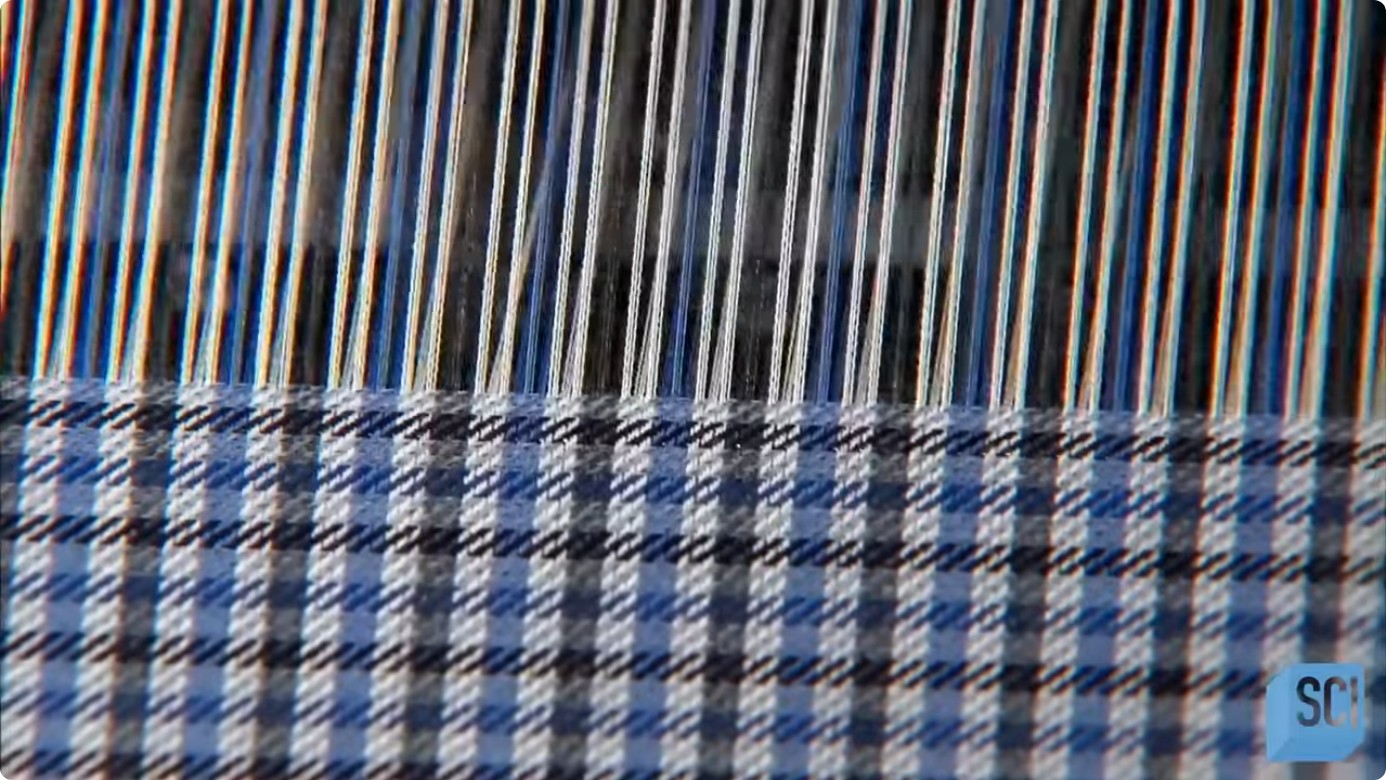
Here, cotton and elastane yarns are woven on a loom in an over-under pattern. Stretch is typically engineered only in the weft (crosswise) direction by using an elastane yarn in the weft and a cotton yarn in the warp (lengthwise).
Common Weaves: Twill (like denim), canvas, plain weave.
Properties: More structured, stable, and durable than knits. Provides stretch where you want it (usually widthwise for sitting and bending) while maintaining the crispness and shape of a woven. Resists runs.
Typical Applications: Stretch denim, workwear, chinos, structured dresses, and tailored trousers that need a bit of “give” in the seat and thigh.
Key Trade-off: Less overall stretch and compressibility than a knit. The stretch is directional.
Quick Comparison: Knit vs. Woven Cotton Lycra
Feature
Cotton Lycra Knit
Cotton Lycra Woven
Stretch Direction
Bi-stretch (2-way) or 4-way
Primarily bi-stretch (widthwise)
Hand & Drape
Soft, drapey, casual
Structured, crisp, holds shape
Durability (Runs)
Can ladder if snagged
Highly resistant to runs
Common Use Case
Activewear, casual fitted wear
Jeans, trousers, structured apparel
Decoding Fabric Specs: What the Numbers Mean
When sourcing, you’ll encounter technical data sheets. Understanding these is non-negotiable for making an informed decision.
Elastane Content (e.g., 3% Elastane): The percentage by weight. 2-5% is standard for woven fabrics like stretch denim, offering gentle stretch for comfort. 5-12% is common for knit activewear, providing significant compression and recovery. 12%+ is found in performance compression wear and swimwear, where maximum stretch and muscle support are required. A caveat: very high elastane content can lead to “heat compression” where the garment feels tighter in warm conditions and can degrade faster from chlorine, saltwater, and detergent.
Fabric Weight (gsm – grams per square meter): A lightweight cotton lycra knit might be 150-180 gsm (summer tee), while a heavy-duty woven for workwear could be 280-350 gsm. Weight correlates with opacity, durability, and warmth.
Cotton Type: Specs may list “100% Cotton” with the elastane percentage added, or break it down as, for example, “92% Cotton, 8% Elastane.” The cotton type is crucial. Look for Supima® cotton (a premium, extra-long staple variety) if you want superior softness, strength, and pilling resistance. Standard Upland cotton is perfectly serviceable for many applications but has shorter fibers that can protrude, causing surface fuzz.
Finish: Terms like “garment-washed,” “brushed,” or “mercerized” describe post-knitting/weaving treatments that drastically affect hand feel, appearance, and shrinkage. A garment-washed fabric will be softer and have a lived-in look from the start.
Sourcing and Quality Considerations
For designers and buyers, sourcing cotton lycra involves navigating a global supply chain. The major hubs for quality knit fabrics are in Asia (China, Taiwan, South Korea, Vietnam) and Turkey. For woven fabrics like stretch denim, Italy and Japan are renowned for premium finishes, though manufacturing is global.
Key Questions to Ask Your Supplier:
What is the source of the elastane? High-quality Elastane from The LYCRA Company or Hyosung (Creora®) offers superior stretch memory and durability compared to generic alternatives. This is a critical differentiator for performance garments.
Can you provide a pre-production sample (pp sample) and lab test reports? You need to verify hand feel, stretch percentage (tested at 20% stretch and recovery after 24 hours), pilling resistance (ASTM D3512 or Martindale), and colorfastness.
What is the fabric’s shrinkage? Cotton lycra will shrink. A typical spec might be “-3% in length, -2% in width after home laundering.” You must factor this into your pattern grading. Pre-shrunk or sanforized fabrics for wovens reduce but do not eliminate shrinkage.
Is the fabric OEKO-TEX Standard 100 certified? This certification from OEKO-TEX ensures the fabric has been tested for harmful substances, a crucial consideration for apparel, especially for children’s wear or garments with prolonged skin contact.
The Tradeoff: Cost vs. Performance. A 92% cotton/8% elastane fabric using generic cotton and elastane will cost significantly less than one using Supima cotton and LYCRA® fiber. For a basic, high-volume t-shirt, the former may be sufficient. For a premium activewear line where performance and feel are selling points, the investment in better components is non-negotiable.
Performance in the Real World: Applications and Pitfalls
Matching the fabric to the garment’s functional demands is where expertise pays off.
Athleisure & Performance Activewear: Requires high elastane (often 10-20%), excellent moisture management (often achieved through a brushed or specific knit structure), and minimal pilling. Look for fabrics with a smooth face and a slightly Terry-loop back to wick moisture. A common pitfall is using a low-elastane, high-cotton jersey that becomes heavy, soggy, and baggy during intense activity.
Denim: Stretch denim typically uses 1-3% elastane in the weft. The comfort is undeniable, but there’s a durability cost. The constant flexing at stress points (knees, thighs) can cause the elastane to snap, leading to permanent bagging. Higher-quality stretch denim uses a more robust, two-ply weft yarn and often a tighter twill weave to mitigate this.
Underwear and Swimwear: This is the most demanding environment for elastane. Chlorine (in pools and some detergents) and saltwater degrade elastane chains, causing loss of stretch and a chalky feel. For swimwear, specialized chlorine-resistant elastane like XLA® from The LYCRA Company is available but comes at a premium. For underwear, a higher percentage of nylon or polyester in the blend (e.g., 85% Nylon, 15% Elastane) is often more durable than a cotton-rich blend, though less breathable.
Everyday Fashion: Here, hand feel and drape are king. A 95% cotton/5% elastane interlock knit for a fitted dress will provide gentle shaping without feeling restrictive. The focus is on the cotton’s quality—a long-staple, combed cotton will feel luxurious and resist pilling.
Care and Longevity: How to Make It Last
Elastane is the weak link in the cotton-lycra chain. Heat, chemicals, and agitation are its enemies.
Washing: Always use cool or cold water. Heat permanently sets the elastane, reducing its ability to recover and making the garment feel tighter over time. Use a mild detergent; harsh detergents and bleach (especially chlorine bleach) break down elastane fibers.
Drying: Air dry is always best. If you must use a dryer, use the lowest heat setting. High heat is the fastest way to destroy elastane’s recovery properties. Remove garments while still slightly damp to minimize heat exposure.
Ironing: If necessary, iron on a very low setting with a pressing cloth between the iron and the fabric. Never iron directly on the elastane-rich areas, and never use steam.
Storage: Avoid storing cotton lycra under heavy items for long periods, as prolonged compression can permanently deform the fabric’s structure.
Common Questions We Get
Is cotton lycra good for sensitive skin? Pure, high-quality cotton is generally hypoallergenic. The addition of a small percentage of elastane (2-5%) usually doesn’t change this for most people. However, some individuals can be sensitive to the chemicals used in the elastane production or the finishes on the fabric. Look for OEKO-TEX Standard 100 certification to ensure the fabric is tested for harmful substances.
How much stretch should I expect? A well-made fabric will typically stretch 20-40% across the width (on-grain) and recover 90%+ of that stretch after 24 hours. Always request a stretch test from your supplier: mark two points on the fabric, stretch it to a comfortable force (e.g., 5 lbs), measure the elongation, then let it rest for a day and measure again.
Can I recycle cotton lycra? This is a major challenge in textile sustainability. Blending natural and synthetic fibers complicates mechanical recycling. Elastane, even at low percentages, can contaminate a pure cotton recycling stream. Chemical recycling technologies are emerging but are not yet widespread. For now, the most sustainable choice is to buy less, buy better quality (so it lasts longer), and utilize textile recycling programs that handle blended fabrics.
What’s the difference between 92% cotton/8% elastane and 95% cotton/5% elastane? The difference is more significant than the 3% might suggest. The 8% elastane version will feel noticeably more compressive and have a stronger “snap” back to shape. The 5% version will feel more like traditional cotton with just a hint of stretch and recovery. Choose based on the garment’s functional need: support and shaping vs. subtle comfort and ease of movement.