Address
304 North Cardinal
St. Dorchester Center, MA 02124
Work Hours
Monday to Friday: 7AM - 7PM
Weekend: 10AM - 5PM
Address
304 North Cardinal
St. Dorchester Center, MA 02124
Work Hours
Monday to Friday: 7AM - 7PM
Weekend: 10AM - 5PM
You’re designing a hoodie, and the pattern calls for ribbing at the cuffs and waistband. You pick a cotton jersey for its softness, only to find that after a few wears, the bands sag and lose their shape. The culprit is often a misunderstanding of what knit ribbing fabric truly is and which type is right for the job. This guide cuts through the confusion, explaining exactly what ribbing is, how it’s constructed, the critical differences between material blends, and how to source it effectively for your specific project—whether you’re a small-batch maker or a production manager.
Knit ribbing isn’t just any stretchy fabric; it’s a specific knitted structure engineered for elasticity and recovery. Choosing incorrectly can mean the difference between a garment that fits perfectly for years and one that bags out after one season. We’ll break down the mechanics, the material science, and the practical sourcing steps to ensure your next project has the right foundation at its edges and openings.
At its core, ribbing is a weft-knit fabric characterized by vertical columns of alternating knit and purl stitches. This structure creates a distinct ribbed surface and, more importantly, a high degree of lateral (side-to-side) stretch. The most common variation is 1×1 rib, where one column of knit stitches is followed by one column of purl stitches. A 2×2 rib alternates two knits and two purls, creating a broader, more textured rib that often has slightly less immediate stretch but can feel more substantial.
Helpful tip: The Complete Guide to 100% Cotton Gauze Fabric: Properties, Uses, and Sourcing
This construction is fundamentally different from jersey (single jersey), which has a smooth face and a purl backside but only minimal cross-grain stretch. Ribbing’s balanced structure allows it to stretch significantly and, crucially, to recover its original shape. This recovery is what holds a cuff snug to a wrist or a waistband firm to a hip. The gauge (number of needles per inch) also plays a role; a finer gauge rib will be smoother and more delicate, while a coarser gauge is chunkier and often used for heavy sweatshirts.
Ribbing is produced on double-bed knitting machines or specialized V-bed machines. These machines have two sets of needles arranged in opposition. The yarn is fed and the needles manipulate it to form the alternating knit and purl wales (columns). Because the fabric is knitted on both sides simultaneously, it creates a reversible structure where both faces show the ribbed pattern. This inherent stability is why ribbing doesn’t unravel easily if a stitch breaks, unlike some warp knits or woven fabrics.
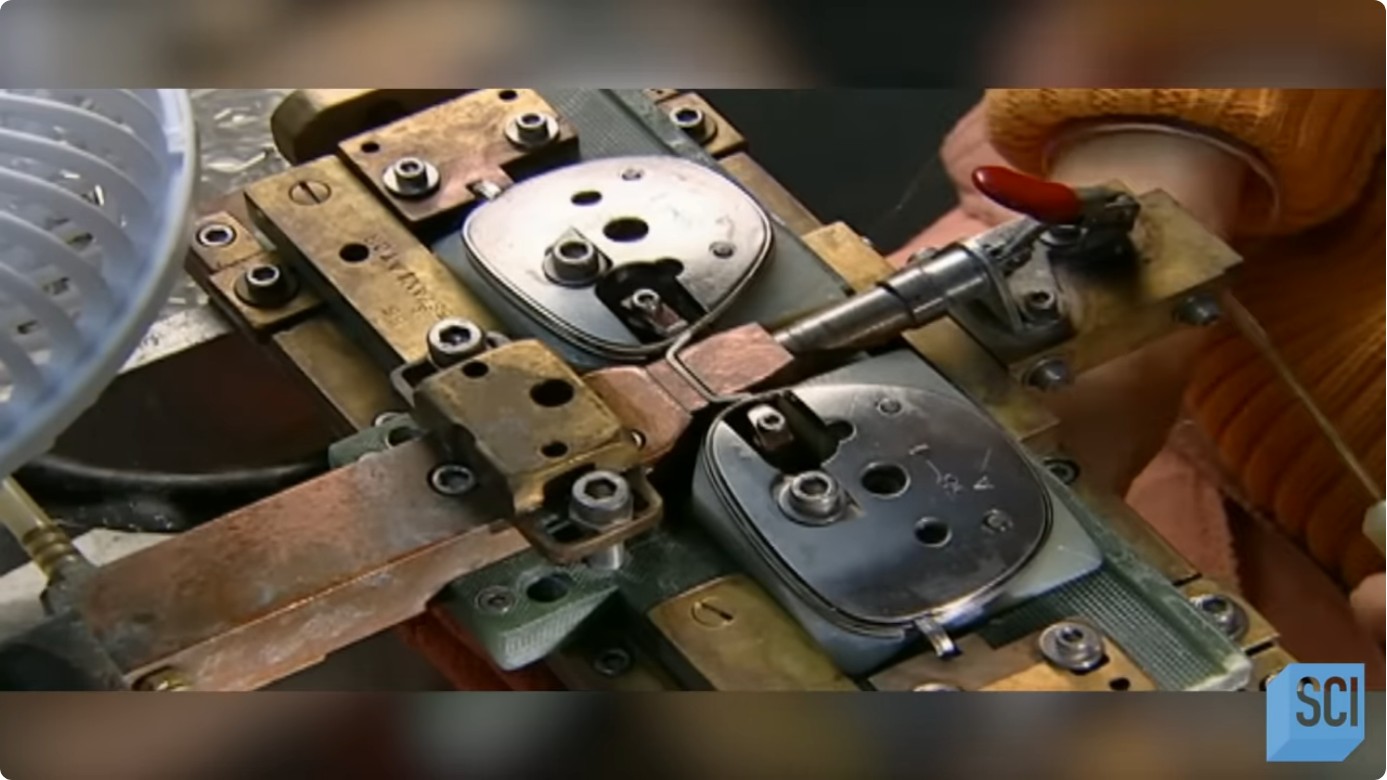
The exact stretch profile is determined by the stitch formation and the yarn’s inherent properties. A machine set for a tighter tension will produce a rib with less immediate stretch but potentially stronger recovery, while a looser setting maximizes initial stretch. For apparel manufacturers, selecting the right machine settings and stitch patterns (like 1×1, 2×2, or even 3×1) is a key specification when ordering fabric.
The fiber composition of ribbing dictates its hand (feel), stretch, recovery, durability, and care requirements. A 100% cotton rib will behave entirely differently from a cotton/polyester blend or a nylon/spandex knit. The tradeoffs are significant and must align with the garment’s intended use.
Here is a breakdown of common fiber types and their practical implications:
| Fiber Content | Stretch & Recovery | Softness & Hand | Durability & Wrinkle Resistance | Best For | Key Caveats |
|---|---|---|---|---|---|
| 100% Cotton | Moderate initial stretch, fair recovery. Can bag out over time. | Very soft, natural, breathable. Classic feel. | Good durability but prone to wrinkling. Shrinks if not pre-shrunk. | Casualwear, basic tees, children’s clothing (where growth is expected). | Avoid for high-motion activewear. Recovery is its primary weakness. |
| Cotton/Polyester Blend (e.g., 60/40, 80/20) | Good stretch, improved recovery over 100% cotton. | Softer than 100% poly, less prone to pilling than 100% cotton. | Excellent durability, wrinkle-resistant, colorfast. Shrinkage minimized. | Workwear, polos, casual hoodies, uniforms. The industry workhorse. | Polyester content reduces breathability. Can feel less “natural” to some. |
| Polyester or Nylon | High initial stretch, very good recovery, especially with elastane. | Smooth, can be slick. Can feel warm. Recycled options available. | Extremely durable, quick-drying, resistant to mildew and chemicals. | Performance activewear, swimwear, outerwear trims, industrial apparel. | Poor moisture wicking alone. Often requires a spandex/Lycra® addition for comfort. |
| Blends with Elastane/Spandex/Lycra® (2-10%) | Exceptional stretch and recovery. The gold standard for form-fitting. | Depends on base fiber. Can feel smooth and supportive. | Elastane degrades with chlorine, high heat, and repeated abrasion. | Athletic wear, swimwear, fitted base layers, dancewear. | Must handle with care: cool wash, no fabric softener, low tumble dry. Cost is higher. |
For small projects, buying ribbing by the yard at a local craft store is feasible. For any production volume, you’ll need to engage with textile suppliers. The sourcing process involves navigating minimum order quantities (MOQs), certifications, and fabric specifications.
Key sourcing considerations include:
For sportswear, swimwear, or medical garments, standard cotton/poly rib won’t suffice. You need engineered performance knits. These often use nylon or polyester bases with a high percentage of elastane (often branded as Lycra® or Spandex) for powerful, lasting recovery. Some incorporate conductive yarns for heating elements or specialized treatments for enhanced moisture management. Suppliers like DuPont (for branded elastane) or mills specializing in activewear textiles will have technical data sheets detailing grams per square meter (GSM), stretch modulus, and pilling resistance.
Even with the right specifications, problems can arise. Here are the most frequent mistakes and how to sidestep them:
Before you place an order, run through this checklist. Your answers will point you to the correct fabric category:
Selecting knit ribbing fabric is a decision that sits at the intersection of design, function, and cost. By understanding the relationship between its knitted structure, fiber composition, and finishing, you can specify a trim that not only looks right but performs reliably over the garment’s entire lifespan. The right ribbing is silent support—it holds its shape so the wearer doesn’t have to think about it.
More advice: PU Coated Fabric: A Practical Guide for Apparel Design and Sourcing