Address
304 North Cardinal
St. Dorchester Center, MA 02124
Work Hours
Monday to Friday: 7AM - 7PM
Weekend: 10AM - 5PM
Address
304 North Cardinal
St. Dorchester Center, MA 02124
Work Hours
Monday to Friday: 7AM - 7PM
Weekend: 10AM - 5PM
When specifying fabrics for structured yet flexible garments, the choice of knit construction is as critical as fiber selection. Thick rib fabric emerges as a cornerstone material for applications requiring significant recovery, thermal retention, and a robust hand feel. Unlike its lighter, more delicate rib cousins used in fine-knit trim, thick rib is engineered for substance. Understanding its specific construction, performance characteristics, and sourcing parameters is essential for anyone moving beyond basic jersey into engineered knits. This guide dissects thick rib fabric, providing the technical context needed to make informed material decisions for apparel, accessories, and technical applications.
We will clarify what makes a rib ‘thick,’ examine how its unique properties translate to real-world use cases, and outline the critical questions to ask suppliers. The goal is to move from vague terminology to a precise specification framework, helping you select the right rib for the right job while anticipating potential tradeoffs in cost, drape, and care.
The term ‘rib’ refers to a specific knitted structure created by alternating knit and purl stitches in columns. This creates vertical columns of loops (the ribs) that naturally compress and recover. The ‘thick’ descriptor is not a formal industry classification but a practical one, resulting from two primary factors:
Thickness begins with the yarn. Using heavier yarns—higher in grams per kilometer (gk) or tex—automatically builds more bulk into each stitch. A thick rib often uses yarns in the range of 30/1 Ne (cotton count) or heavier, or their equivalents in synthetics (e.g., 150 denier polyester). The fiber’s inherent bulk (like wool or acrylic) versus sleekness (like fine microfiber polyester) also dramatically impacts the final fabric weight and hand. A 2×2 rib knit with a chunky wool yarn will be fundamentally different from one knit with a smooth, heavy nylon.
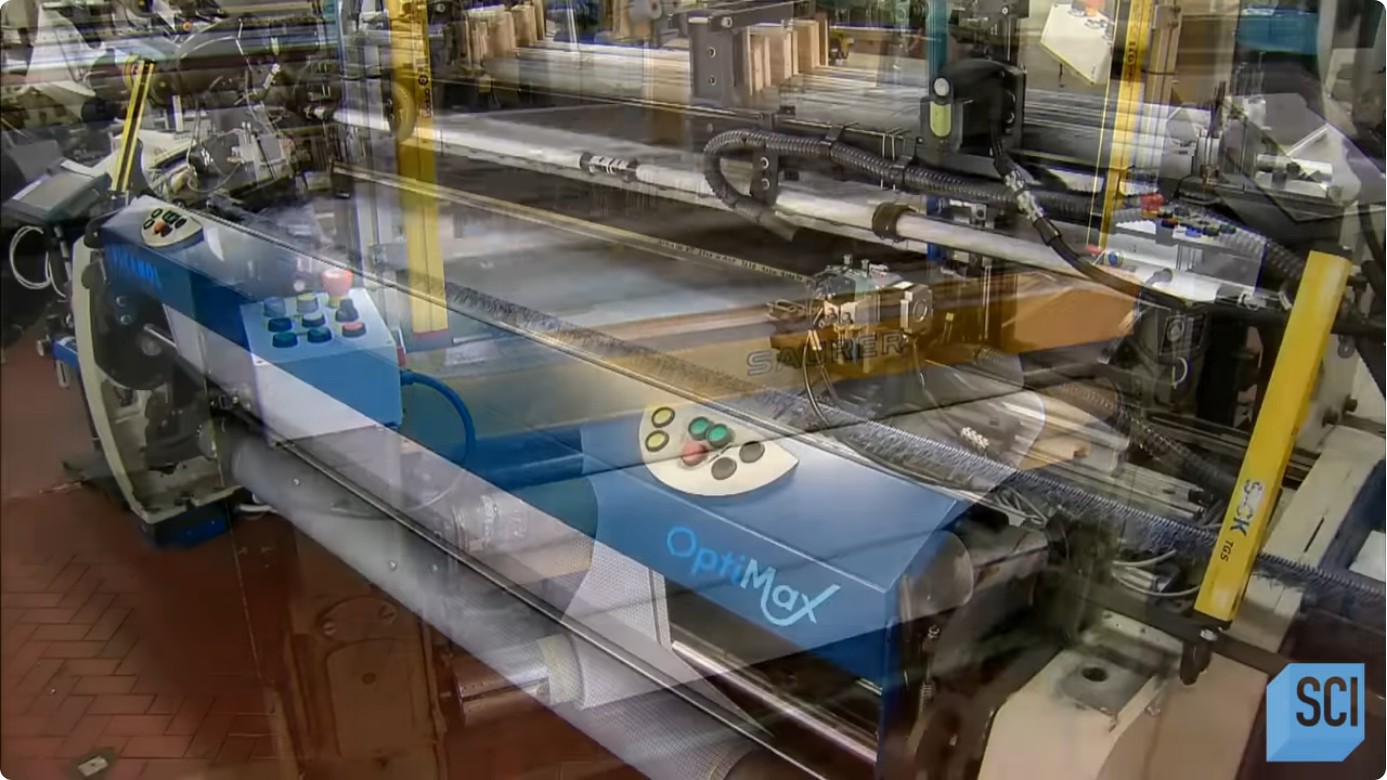
Gauge refers to the number of needles per inch on the knitting machine. A coarse gauge (e.g., 12-18 needles per inch) produces larger loops and a more open, heavier fabric. A fine gauge (e.g., 28+ needles per inch) produces smaller, tighter loops. For a thick rib, you typically combine a heavy yarn with a medium to coarse gauge. The most common rib constructions are:
Ultimately, a fabric’s total weight, measured in grams per square meter (GSM), is the definitive metric. A typical ‘thick’ rib for apparel starts around 350 GSM and can go well beyond 600 GSM for outerwear or upholstery. Always request the GSM from a supplier, as the term ‘thick’ is subjective.
The rib structure imparts a unique set of characteristics. Understanding these helps match the fabric to the product’s functional requirements.
The purl stitches act as hinges, allowing the fabric to stretch significantly in the width direction (cross-grain). The key metric here is recovery—the ability to return to its original dimensions after stretching. Thick ribs, especially those with elastane or Lycra® yarns (often 10-20% content), exhibit outstanding recovery, making them ideal for fitted activewear, base layers, and form-fitting casualwear where shape retention is paramount. Without elastane, recovery is good but not perfect, suitable for structured pieces that need some give but not constant motion.
The bulk created by the yarn and the structure’s inherent loft traps air, providing excellent insulation. This makes thick rib a natural choice for cold-weather mid-layers, thermal underwear, and sweater bodies. The dense, vertical columns also offer a degree of wind resistance that a lightweight jersey cannot match, though it is not windproof like a laminated membrane.
Thick rib has less tendency to distort or “grow” lengthwise compared to jersey knits. The balanced nature of the rib knit (knit vs. purl tensions) means it lies flatter and is more stable during garment assembly and wear. This stability is why it’s preferred for waistbands, cuffs, and collars on heavier garments—it won’t roll or twist as easily.
Every advantage has a counterbalance. The primary tradeoffs of thick rib are:
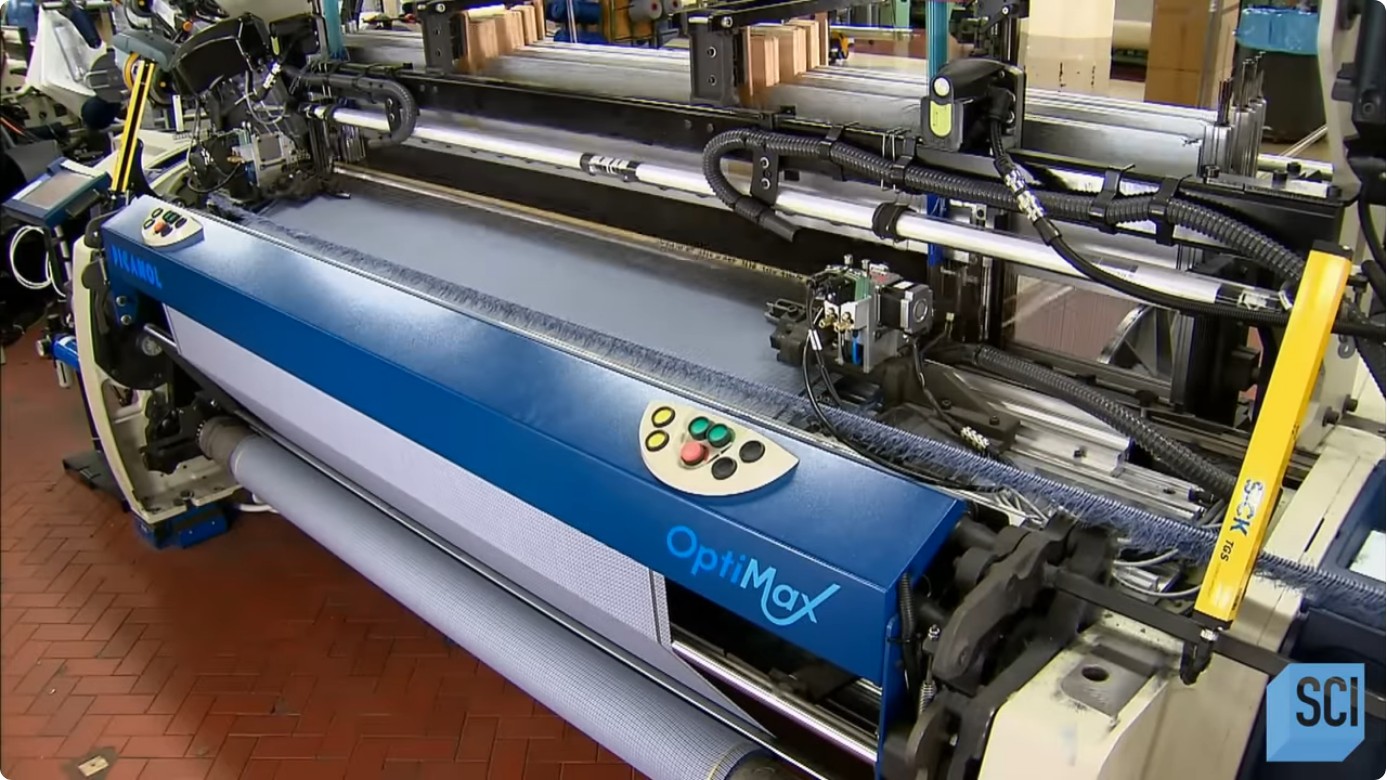
Seeing where thick rib succeeds (and fails) in the market clarifies its utility.
| Application Area | Typical GSM Range | Preferred Construction | Key Justification |
|---|---|---|---|
| Athletic Waistbands/Cuffs | 280 – 380 GSM | 1×1 or 2×2 with Elastane | High recovery, secure fit, minimal bulk at edges. |
| Cold-Weather Base Layers | 320 – 450 GSM | 2×2, often brushed | Insulation, moisture management (if synthetic), next-to-skin softness. |
| Heavyweight Sweatshirts/Hoodies | 380 – 500+ GSM | 2×2 or 3×1, French Terry or loopback | Substance, durability, warm hand feel. |
| Outerwear Panels (e.g., collar, yoke) | 400 – 600 GSM | 2×2 or 3×1, often acrylic/wool blend | Wind resistance, structure, weather-resistant hand. |
| Upholstery & Automotive | 600 – 1000+ GSM | Heavy 3×1 or wider, often polyester | Extreme durability, abrasion resistance, dimensional stability. |
| Fashion Statement Pieces | 350 – 500 GSM | 2×2 in textured or colored yarns | Bold visual texture, sculptural silhouette. |
A practical example: A brand designing a running tight might specify a 280 GSM 1×1 rib with 15% Lycra® for the high-recovery waistband. For the main body of a winter cycling jacket, they might switch to a 420 GSM 2×2 rib with a brushed interior for warmth and moderate wind block. Using the thick rib for the entire tight would be far too heavy and restrictive.
Vague requests for ‘thick rib fabric’ will yield inconsistent results. Use this checklist to build a precise specification.
Key Caveat: A higher GSM does not automatically mean a ‘better’ or more durable fabric. A poorly spun, low-twist yarn at 500 GSM can feel weak and pill faster than a tightly constructed 350 GSM fabric. Always evaluate the fabric’s hand, recovery, and pilling resistance through physical swatches and wash tests.
Modern thick ribs are rarely 100% of a single fiber. Blends are engineered to balance properties:
Before finalizing a thick rib for production, consider these less obvious factors:
Thick rib fabric is not a generic material but a family of engineered knits defined by construction, yarn, and weight. Its value lies in providing a rare combination of structured stretch, thermal mass, and recovery. Successfully incorporating it requires moving beyond the vague term ‘thick’ and engaging with suppliers using the precise language of GSM, rib gauge, and composition. By doing so, you transform a procurement challenge into a strategic material decision that directly enhances the performance, comfort, and perceived quality of the final product. The right thick rib can be the defining element that elevates a garment from basic to purpose-built.
Selecting the correct thick rib involves balancing many variables. Here are answers to frequent lingering doubts:




