Address
304 North Cardinal
St. Dorchester Center, MA 02124
Work Hours
Monday to Friday: 7AM - 7PM
Weekend: 10AM - 5PM
Address
304 North Cardinal
St. Dorchester Center, MA 02124
Work Hours
Monday to Friday: 7AM - 7PM
Weekend: 10AM - 5PM
When you see “100% nylon” on a fabric label or specification, it means exactly that: a textile constructed entirely from nylon fibers, with no cotton, polyester, spandex, or other materials blended in. This pure form of one of the world’s first synthetic fibers offers a distinct set of characteristics that make it indispensable for specific applications, from high-performance gear to industrial uses. Understanding this material in its unaltered state is crucial for designers, product developers, and procurement specialists who need to match fabric performance to a project’s exact demands. This guide cuts through the generalities to explore the definitive traits, practical limits, and strategic considerations of working with 100% nylon.
While nylon is often blended to modify its feel or function, the 100% variant represents the fiber’s baseline performance. It is not inherently “better” or “worse” than blends; it is simply a specific tool with a specific job description. Choosing it correctly requires knowing its strengths—like exceptional strength-to-weight ratio and low moisture absorbency—and its inherent trade-offs, such as its tendency to generate static and its sensitivity to high heat. This article provides the actionable details needed to make that choice with confidence.
At its core, 100% nylon fabric is woven or knitted from filaments or spun yarns composed solely of polyamide polymers. The most common types are Nylon 6 and Nylon 6,6, which differ in their molecular structure and, consequently, in properties like melting point, moisture regain, and resilience. Nylon 6,6 generally has a higher melting point and greater toughness, while Nylon 6 is slightly more elastic and easier to dye. For apparel and soft goods, the distinction is often nuanced, but for industrial or extreme-performance applications, it becomes a critical specification.
The fabric’s construction—whether a tight plain weave for maximum durability, a ripstop weave for tear resistance, or a delicate tricot knit for lingerie—dramatically influences the final hand feel and performance. A 100% nylon label does not guarantee a silky parachute cloth; it could just as easily be a coarse, rugged canvas. Therefore, specifying “100% nylon” is only the first step; you must also define the weave, yarn count, and denier (fiber thickness).
Think of this as your foundational checklist for identifying and specifying the material:
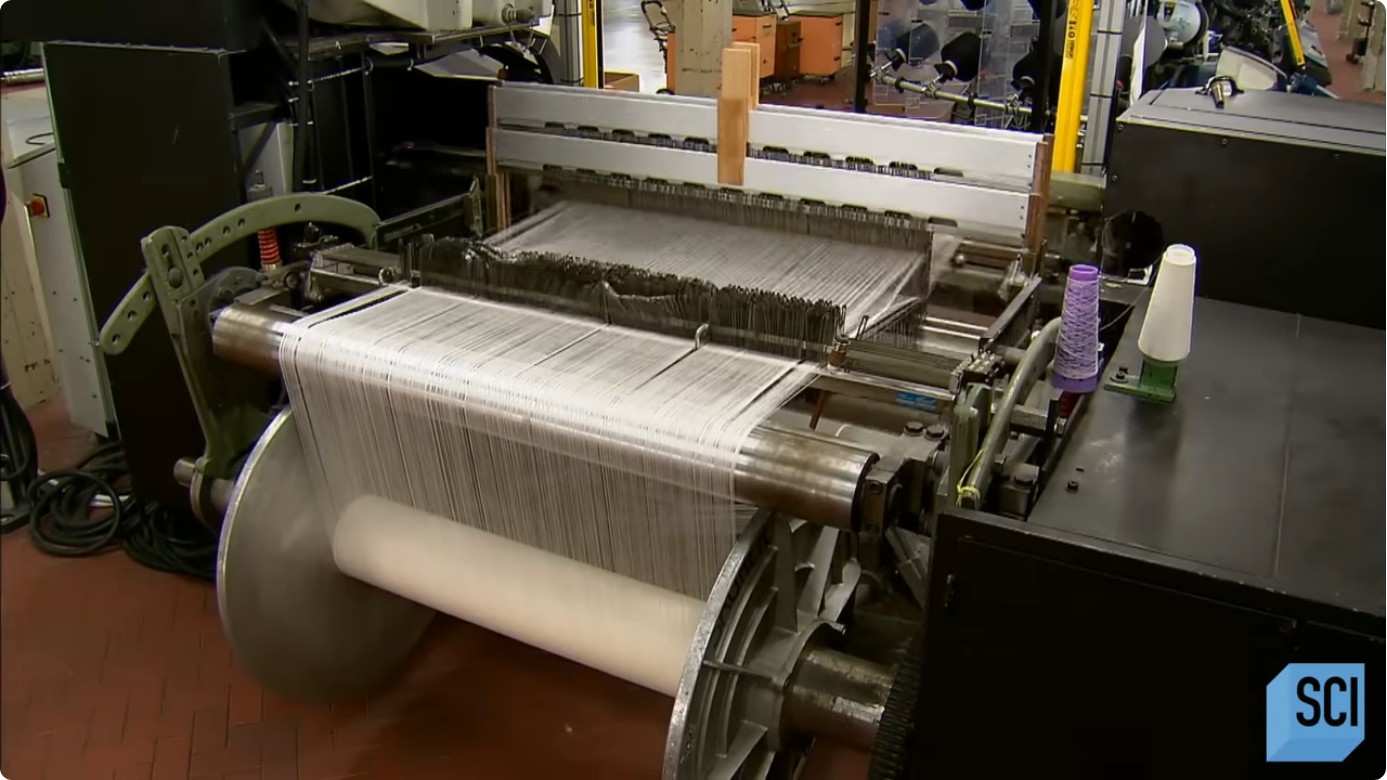
Pure nylon’s reputation is built on a few extraordinary physical properties. Its most famous attribute is an incredible strength-to-weight ratio. Nylon fibers are exceptionally strong and abrasion-resistant, meaning a thin, lightweight nylon fabric can withstand significant wear and tear. This is why it became famous for stockings and parachutes in the 1940s.
Equally important is its low moisture absorbency. Nylon absorbs less than 4% of its weight in water, compared to cotton’s 8-9% or wool’s 30-40%. This means 100% nylon fabrics dry quickly, resist swelling or distorting when wet, and maintain their dimensional stability. However, this low absorbency also means it has poor moisture wicking for skin comfort; sweat sits on the skin rather than being drawn away, a key reason it’s rarely used alone for next-to-skin athletic wear today.
To understand nylon’s niche, comparing it to the most frequently considered substitutes is useful. The following table focuses on baseline, unblended fibers in typical apparel constructions.
| Property | 100% Nylon | 100% Polyester | 100% Cotton |
|---|---|---|---|
| Tensile Strength | Very High | High | Moderate |
| Abrasion Resistance | Excellent | Excellent | Fair |
| Moisture Regain | Low (~4%) | Low (~0.4%) | High (~8%) |
| Drying Speed | Fast | Very Fast | Slow |
| Heat Resistance | Moderate (melts ~500°F/260°C) | Higher (melts ~500°F/260°C, softens earlier) | Low (burns, scorches) |
| UV Resistance | Poor to Fair (degrades over time) | Good to Very Good | Poor |
| Static Generation | High (prone to clinging, sparks) | Moderate to High | Low (when humid) |
Note: Values are general comparisons. Specific fabrics vary by weave, finish, and fiber subtype.
The unique profile of pure nylon makes it the engineered choice for several non-negotiable applications. Its use is rarely about comfort and almost always about function.
No fabric is perfect, and 100% nylon’s strengths are balanced by clear, often deal-breaking, weaknesses. Acknowledging these is essential before selecting it for a project.
Procuring 100% nylon fabric requires attention to specifications that go beyond the fiber content label. The performance is defined by the subtype (Nylon 6 vs. 6,6), the denier (fiber thickness, e.g., 70d for lightweight, 1000d for rugged), the weave or knit construction, and any finishes (DWR, anti-static, fire retardant).
When sourcing, especially for wholesale or production:
Is 100% nylon waterproof?
No. Uncoated, plain-weave 100% nylon is highly water-resistant (it will bead and run off due to surface tension) but not waterproof under pressure. For true waterproofness, it must be coated (PU, silicone) or laminated with a membrane, as in a 2-layer or 3-layer shell fabric.
How do you care for 100% nylon?
Machine wash cold with like fabrics. Use mild detergent—no bleach or fabric softener (which can coat fibers and reduce water repellency). Tumble dry low or air dry. Iron on the lowest heat setting with a pressing cloth. Avoid high-heat settings on dryers and irons.
Why does my 100% nylon fabric feel stiff?
Many pure nylons, especially heavier weights, have a crisp, stiff hand due to the fiber’s inherent stiffness and lack of softeners from blends. This can be modified with mechanical softening (brushing) or chemical finishes, but the base fiber will always have more “snap” than cotton or rayon.
Can 100% nylon be dyed at home?
It is very difficult. Nylon requires high-temperature dyeing (near boiling) with acid dyes, which are not typically consumer-safe. Disperse dyes for polyester will not work well. Professional dyeing is recommended for reliable, even color. Pre-dyed fabric from a mill is the standard approach.
100% nylon is not a versatile all-rounder; it is a specialist. Its value is unlocked in applications where lightweight strength, abrasion resistance, and low moisture regain are the paramount requirements, and where its drawbacks—static, odor retention, heat sensitivity—are either irrelevant or can be mitigated by finishes. When you need a fabric that won’t swell, sag, or degrade when wet, that can be made into an incredibly tough, featherweight material, pure nylon remains unmatched. The key is to look past the simple “100%” label and demand the full technical picture: the specific nylon type, the construction, and the finishes. With that information, you can determine if this classic synthetic truly fits the job, or if a modern blend would serve your purpose more effectively and comfortably.


