Address
304 North Cardinal
St. Dorchester Center, MA 02124
Work Hours
Monday to Friday: 7AM - 7PM
Weekend: 10AM - 5PM
Address
304 North Cardinal
St. Dorchester Center, MA 02124
Work Hours
Monday to Friday: 7AM - 7PM
Weekend: 10AM - 5PM
Holographic material fabric strikes the eye with its shimmering, color-shifting surface, evoking everything from futuristic techwear to festival fashion. But beneath the dazzling appearance lies a category of textiles with specific constructions, significant performance trade-offs, and precise sourcing pathways. Understanding these fundamentals is crucial for anyone looking to specify, source, or work with these materials successfully. This guide cuts through the spectacle to provide a clear, actionable overview of holographic fabrics as they apply to apparel and textile products.
The term “holographic fabric” is often used broadly. Technically, true holograms are complex light-field recordings, which are not integrated into textiles. What the industry calls holographic fabric is typically a substrate—often a polyester or nylon base—coated or laminated with a thin, micro-structured film. This film, usually a form of polyvinyl chloride (PVC) or a specialized polyester, contains precise microscopic ridges or gratings that diffract light, creating that signature rainbow iridescence. The effect is a surface-level optical phenomenon, not an inherent property of the yarn itself.
The manufacturing method defines the fabric’s hand, durability, and cost. There are two dominant approaches:
This is the most common and cost-effective method. A base fabric (often a lightweight woven or knit polyester) is passed through a process where the holographic film is either heat-laminated onto one side or coated as a viscous solution that dries into a solid layer. The holographic pattern is pre-embossed onto the film before application.
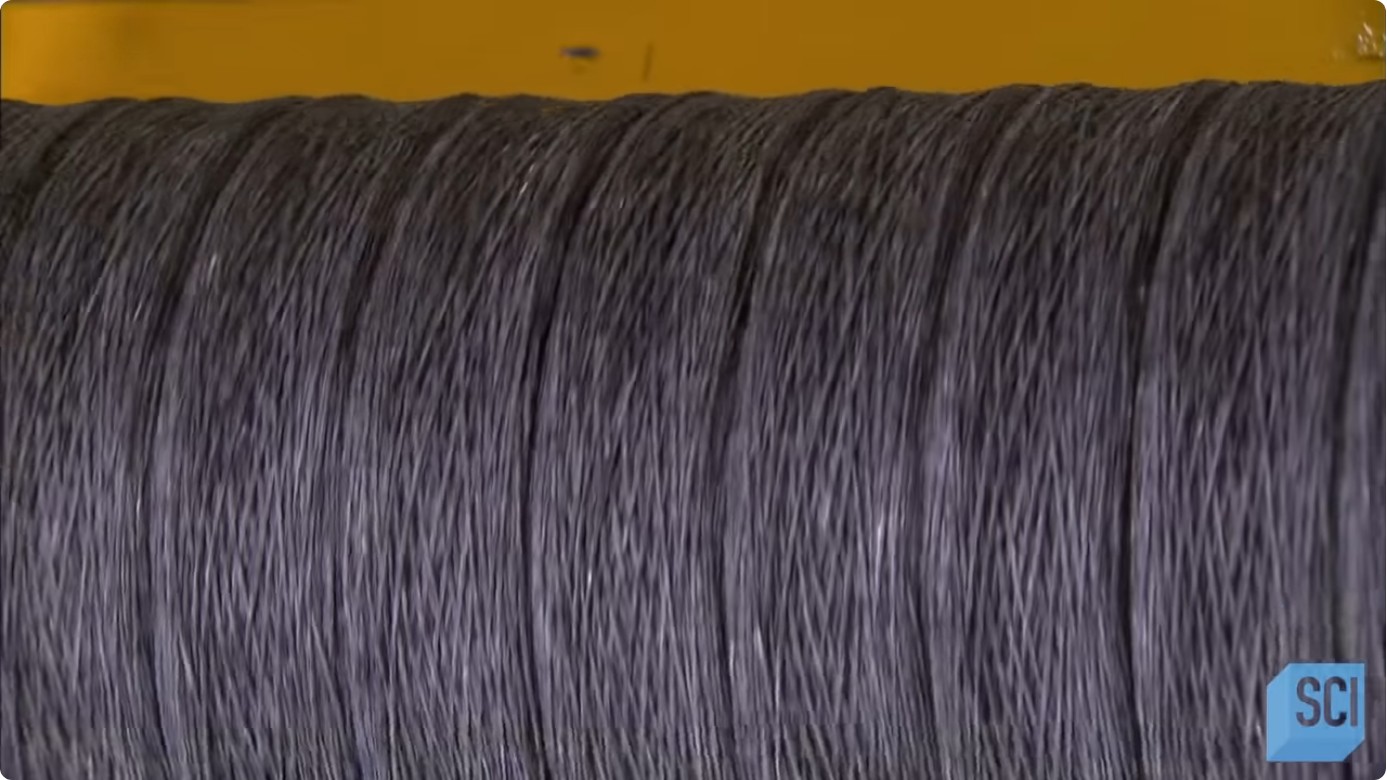
In this premium construction, the reflective, structured element is built into the yarn itself. Specialized metallic or iridescent yarns—often using films like polyester-based holographic film strips or embellished with finely cut metallics—are woven or knitted directly with the base yarns. The entire fabric structure participates in the light diffraction.
A quick comparison: Think of film-laminated as “holographic wallpaper glued to cloth” and yarn-integrated as “cloth woven with holographic thread.” The latter is almost always the choice for high-end fashion applications where luxury feel and longevity are paramount.
Specifying holographic fabric requires balancing its signature aesthetic against several functional limitations. A side-by-side look is essential:
| Property | Typical Behavior | Design/Sourcing Implication |
|---|---|---|
| Drapability & Hand | Film-laminated types are often stiff, crisp, or rubbery. Yarn-integrated types drape more like a regular satin or chiffon. | Choose film-laminate for structured pieces (bustiers, bags, trims). Choose yarn-integrated for fluid dresses, flowing sleeves. |
| Breathability & Comfort | Very low. The plasticized film layer acts as a barrier to moisture vapor. Can cause sweat buildup. | Not suitable for base layers or high-exertion activewear. Best for accent pieces, outerwear shells, or costumes worn intermittently. |
| Durability & Care | Film can crack at stress points (knees, elbows). Prone to peeling from edges. Requires gentle, cold-water hand washing or professional cleaning. No high heat. | Informs garment design: avoid high-friction seams. Label care instructions clearly. For permanent products, specify yarn-integrated construction. |
| Reflectivity & Appearance | Highly reflective, almost mirror-like at certain angles. Color shift is dramatic. Can appear “cheap” if low-quality film is used (blurry diffraction). | Quality is directly tied to the precision of the micro-grating. Request swatches and examine under different light sources (LED vs. sunlight). |
| Cost | Film-laminated: $5-$25/yd. Yarn-integrated: $30-$100+/yd depending on fiber blend and complexity. | Budget drives construction choice. A small holographic yoke or panel can achieve impact without full-garment cost. |
Sourcing holographic fabric differs from standard textiles due to niche production and quality variance.
The right application maximizes impact while minimizing the fabric’s drawbacks.
This is a critical and complex area. Holographic fabrics present a clear environmental trade-off:
You may also like: Interlock Jersey Knit: A Practical Guide to Fabric Structure, Properties, and Sourcing
Before requesting samples or placing an order, work through this list:
Can I dye holographic fabric?
Generally, no. The holographic film is a pre-colored, structural finish. You cannot over-dye it. Some suppliers offer film in different base colors (blue, red, green), but the iridescent shift will blend with that base. For custom colors, you must work with a mill that can apply the film in that specific hue, which is a custom order with high minimums.
Is holographic fabric the same as iridescent or metallic fabric?
No. Iridescent fabrics change color with angle due to optical interference from thin layers (like oil on water) or special yarns (like shot silk). Metallic fabrics use solid-color metallic threads or coatings. Holographic fabric specifically uses a micro-grated surface to split light into its spectral components, creating a distinct rainbow effect. A fabric can be both metallic and holographic if the film has a metallic base.
What’s the best way to sew with these fabrics?
Use a sharp, fine needle (e.g., 70/10 or 80/12 ballpoint for knits, sharp for wovens). A specialty thread like polyester or nylon is essential; cotton will break. Use a longer stitch length (3.0-3.5mm) to reduce perforation and potential cracking. Press with a low-heat iron and a pressing cloth; never apply direct high heat, which will melt the film. For film-laminated fabrics, a roller press (if available) is ideal.
Where can I find reliable suppliers?
Holographic material fabric is a powerful design tool when its physics and limitations are respected. By focusing on the construction type, matching it to a suitable end-use, and rigorously sampling, you can harness its eye-catching allure without falling prey to its functional shortcomings. The key is to treat it not as a miracle material, but as a specialized component with a very specific—and brilliant—set of rules.


