Address
304 North Cardinal
St. Dorchester Center, MA 02124
Work Hours
Monday to Friday: 7AM - 7PM
Weekend: 10AM - 5PM
Address
304 North Cardinal
St. Dorchester Center, MA 02124
Work Hours
Monday to Friday: 7AM - 7PM
Weekend: 10AM - 5PM
When you pull on a fitted t-shirt, the snug, elastic band at the neckline, cuffs, and hem often feels distinctly different from the main body of the garment. That specialized material is almost certainly cotton ribbing—a foundational component in casual and athletic apparel whose performance is defined by its unique knitted structure. Understanding this fabric goes beyond recognizing its texture; it involves knowing how its construction dictates its behavior, where it excels, where it falls short, and how to source it effectively for your specific project, whether you’re a small-brand designer or a seasoned production manager.
This guide cuts through the generalities to provide a detailed look at cotton ribbing. We will deconstruct what makes it stretchy yet stable, examine its real-world performance in garments from basics to activewear, and provide a clear framework for evaluating suppliers and specifications. The goal is to equip you with the knowledge to make informed decisions, avoiding common pitfalls like unexpected shrinkage or unsuitable fabric selection.
To understand ribbing, you must first understand the fundamental difference between a weft knit (like jersey) and a warp knit. Cotton ribbing is a variant of weft knitting. In a standard 1×1 rib, the machine alternates knitting one column of stitches on the front needle bed and one column on the back needle bed. This creates vertical columns of alternating knit and purl stitches, which are the characteristic “ribs.”
You may also like: Black Scale Fabric: A Practical Guide to Material, Properties, and Sourcing
This alternating column structure is the source of its remarkable elasticity. When you stretch the fabric widthwise (across the ribs), the loops in each column can easily straighten and expand. When released, the yarn’s inherent memory and the balanced tension of the knit structure pull it back to its original width. The density of the ribs—commonly 1×1 (one knit, one purl), 2×2 (two knit, two purl), or 3×1—affects the fabric’s hand and recovery. A 2×2 rib is fuller, softer, and has slightly less firm recovery than a tight 1×1 rib, which is why you’ll often find 1×1 used for neckbands where maximum snap-back is needed.
It’s easy to confuse ribbing with a standard cotton jersey. The difference is stark in behavior:
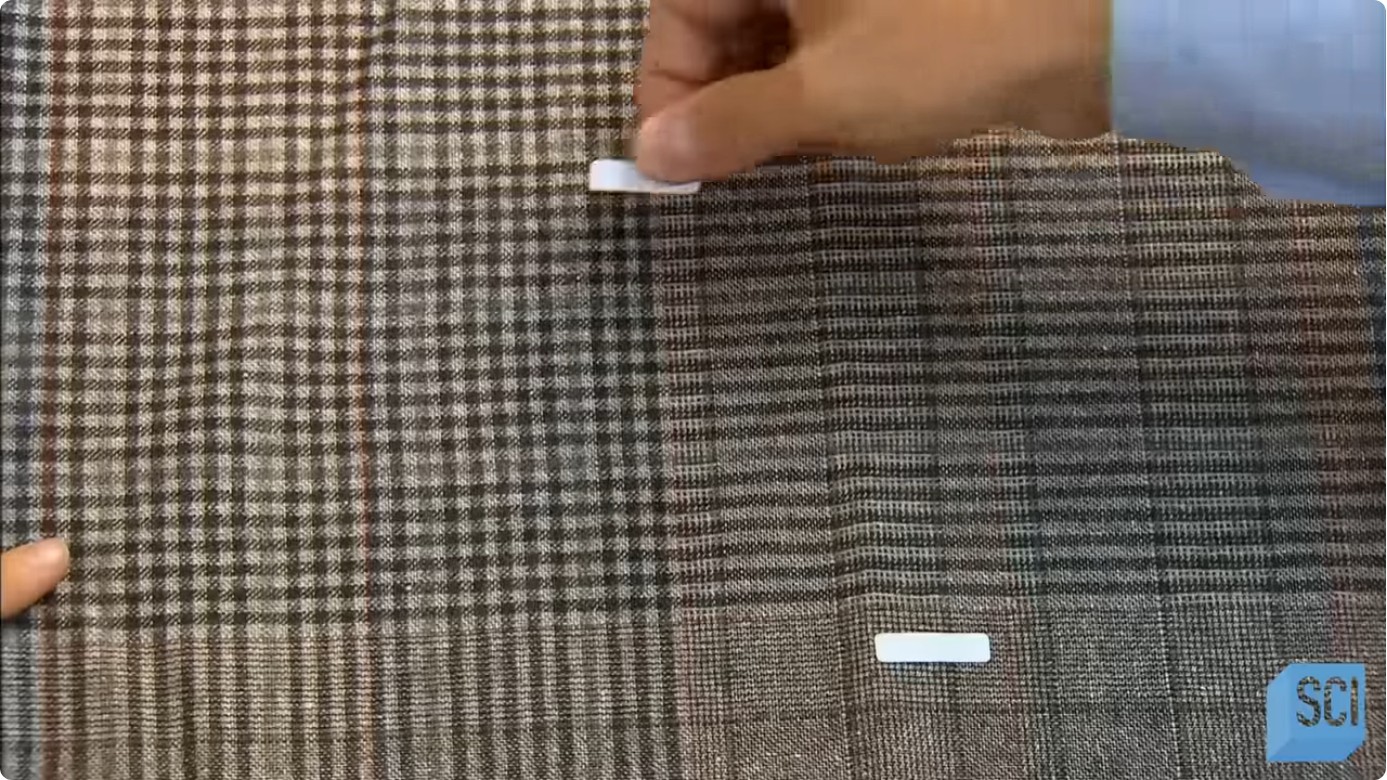
The term “cotton ribbing” is often used broadly. For precision, we must differentiate between pure cotton and blends, as this is the single most important factor affecting performance.
This is the traditional, all-natural option. Its characteristics are inherent to the cotton fiber itself.
This is the modern workhorse for performance casualwear. The small percentage of spandex (also known as elastane or Lycra®) dramatically changes the fabric’s behavior.
| Feature | 100% Cotton Rib | Cotton/Spandex Blends (95/5) |
|---|---|---|
| Widthwise Stretch Force | Moderate | High |
| Recovery (after stretching) | Good to Fair | Excellent |
| Shape Retention Over Time | Poor to Moderate | Very Good |
| Typical Hand | Matte, organic, soft | Smooth, slightly firm, resilient |
| Primary Shrinkage Risk | Very High | Moderate to High |
| Best Application | Casual, loose-fit bands, organic/sustainable claims | Fitted activewear, performance basics, premium streetwear |
The choice between 100% cotton and a blend isn’t just about material; it’s about the garment’s function. A designer must match the ribbing’s properties to the stress it will endure.
For a compressive, muscle-supporting t-shirt or a legging that must return to shape after dynamic movement, a cotton/spandex rib with a high stitch count (tight gauge) is essential. The spandex provides the power, and the tight knit prevents excessive distortion. Here, 100% cotton would fail, leading to a baggy, ill-fitting garment after the first few wears and washes.
For a loose-fit, cozy sweatshirt where the ribbed cuffs and hem are meant to provide a gentle, non-constricting hold, a heavier, 100% organic cotton rib can be a perfect aesthetic and philosophical choice. The recovery demands are lower, and the natural, untreated feel aligns with a sustainability narrative. The trade-off is accepting that the cuffs will soften and loosen over time, which may be part of the intended “lived-in” look.
This is a high-risk category for ribbing failure due to aggressive stretching and frequent washing. Blended ribbing is strongly recommended for any fitted component. For very young children, consider a rib with a protective nylon or polyester facing to resist abrasion from crawling and playing.
Caveat: Be mindful of spandex degradation. High heat from dryers and certain chlorine-based bleaches can break down spandex fibers over time, permanently reducing stretch and recovery. Care instructions are part of the fabric specification.
Ordering “cotton ribbing” without specifics is a recipe for inconsistency. You must communicate clearly. Use this checklist when requesting quotes or samples.
When evaluating suppliers, prioritize those who provide detailed technical sheets and are transparent about their mill origins. For smaller orders, domestic or regional fabric distributors may offer more flexible minimums and faster shipping than direct mill imports. Online marketplaces can be useful for prototyping but require extreme diligence—always order a physical bulk sample, not just a swatch card.
Even the best ribbing can be compromised by poor care. The cardinal rule is to wash in cool water and tumble dry on low heat or, ideally, air dry. High heat is the primary enemy of both cotton (causing shrinkage) and spandex (causing thermal degradation). For 100% cotton rib, pre-wash your fabric bolt-for-bolt before cutting to avoid a finished garment that shrinks into a children’s size.
From an environmental standpoint, the choice is nuanced. 100% organic cotton ribbing avoids pesticide use but has a high water footprint. Cotton/spandex blends introduce a synthetic, petroleum-based fiber that is not biodegradable. However, blends like Tencel™/cotton/spandex or recycled polyester/cotton blends are emerging, offering a compromise of performance and reduced virgin resource use. Look for bluesign® or Oeko-Tex Standard 100 certifications on the fabric to ensure responsible chemical management in production.
Choosing the right cotton ribbing is a balancing act between cost, performance, hand feel, and longevity. The final decision should be guided by the garment’s primary stress point—is the ribbing there for structure, comfort, or both? A fitted technical piece demands a high-gauge cotton/spandex blend. A relaxed, unisex hoodie can successfully use a heavier, 100% cotton rib if the design accounts for its softening over time.
What if my ribbing is rolling at the edges? This is almost always a tension or gauge issue from knitting, not a fabric flaw. Report it to the supplier with a sample. It can sometimes be corrected with careful steam pressing, but prevention at the mill is key.
Can I use cotton ribbing for a full garment body? Technically yes, but it’s inefficient and expensive. Ribbing has a much lower production speed and higher yarn cost than jersey. For a full garment, jersey is almost always the better choice; ribbing is engineered for its specific, high-recovery function at edges.
How much extra width should I add for stretch in my pattern? This depends entirely on your fabric’s recovery. For a cotton/spandex 1×1 rib, a 10-15% negative ease (pattern width smaller than body measurement) is typical for a firm fit. For 100% cotton rib, use minimal or zero negative ease for a comfortable fit, as it won’t recover as aggressively. Always test with a fabric swatch sewn into a small band.
Also read: Cotton With Spandex Fabric: A Practical Guide to Blends, Properties, and Sourcing


