Address
304 North Cardinal
St. Dorchester Center, MA 02124
Work Hours
Monday to Friday: 7AM - 7PM
Weekend: 10AM - 5PM
Address
304 North Cardinal
St. Dorchester Center, MA 02124
Work Hours
Monday to Friday: 7AM - 7PM
Weekend: 10AM - 5PM
Who wrote this: This guide comes from the knitting floor team at Shaoxing Keqiao Lianyang Fabric Co., Ltd (Pura Fabric), a weft-knit fabric manufacturer established in 2010 in Keqiao, Shaoxing, China, operating 52 circular knitting machines across a 4,000 sqm facility. The specification logic below is the same checklist we use when we quote on our own floor.
French terry fabric is one of the most requested constructions in the knitwear market, and it is also one of the most frequently specified badly. The word gets used for anything with a fuzzy face, which means mills quote against it, buyers receive samples that do not match what they pictured, and the fabric gets ordered twice before it is right.
This guide works through what French terry actually is, how the loop is built, how it behaves in the wash, and how to specify it for bulk production — including the six points that most often separate a good delivery from a disappointing one. It is written for garment and fabric buyers who need to specify rather than for readers who are only curious.
French terry is a three-dimensional knit defined by one thing: the pile. Thousands of tiny yarn loops are raised off the ground plane on the face of the fabric, creating a soft, spongy surface with visible depth, while the back stays flat and smooth with the anchoring points visible as a fine dotted texture. That two-sided structure — loop face, flat back — explains most of the performance characteristics buyers care about, and it is why the fabric behaves differently from both woven toweling and single-jersey knit.
The name is frequently confused with two other constructions. Terry cloth is the broader family, and it includes both French terry and Chinese terry, distinguished mainly by the yarn used in the pile. Chinese terry typically uses a finer, more uniform yarn, produces a denser pile, and is often brushed or sheared on the face for extra softness. French terry generally uses a slightly coarser spun yarn, a lower pile density, and retains a visible loop texture rather than a brushed one. When a buyer specifies “French terry” they are usually asking for the visible loop, a moderate pile, and the characteristic soft-but-structured handle that comes from a three-end fleece yarn.
The loop is not decorative. It creates air space between fabric and skin, which is why French terry dries slower than flat knit but feels warmer when damp, and it wicks along the yarn rather than across the surface, moving moisture outward and leaving a soft layer rather than a clammy one. For anyone specifying for sweatshirts, hoodies, towels or robes, those two behaviours are usually the deciding factors.
The fabric is knitted, not woven, on circular or flat knitting machines. This matters commercially: knitted fabric can be cut and sewn without the fraying that woven edges require, it stretches in both directions, and it does not have a grain line that constrains pattern layout. A buyer moving from woven toweling to French terry is buying that freedom as much as the texture.
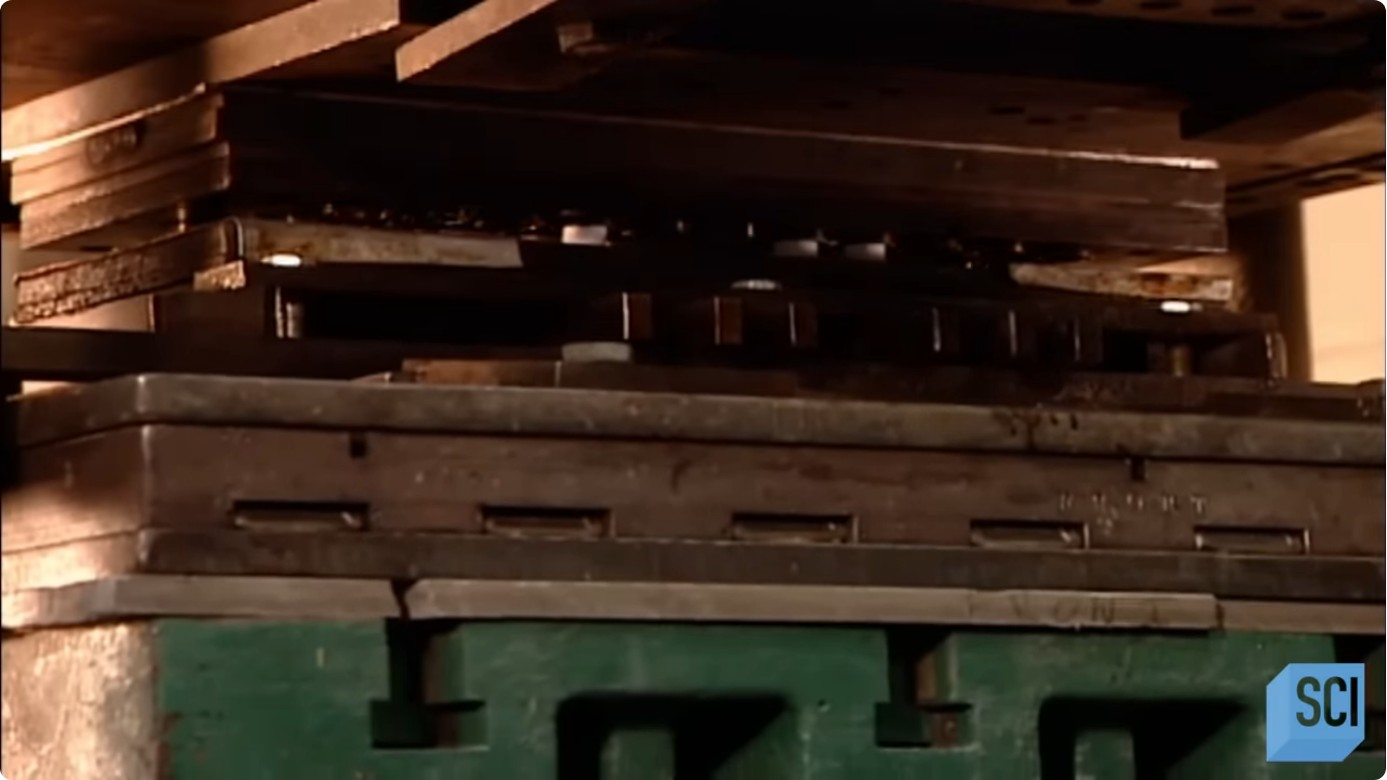
Understanding the loop is the difference between specifying French terry correctly and guessing at it. A loop forms when one yarn is manipulated so that part of it rises above the ground plane instead of lying flat. Because that loop is continuous with the ground loop, it is structurally part of the fabric rather than a separate yarn sitting on top — which is why French terry does not shed or pill off the way a brushed or flocked surface does.
Three variables define the resulting fabric, and all three should be specified rather than assumed.
Pile height is the length of the raised loop. It is the most visible difference between a lightweight summer terry and a heavy winter one. Short loops produce a flatter, faster-drying, more fabric-like surface; long loops produce a shaggy, warmer, more towel-like surface. The trade-off is direct: longer loops add warmth and bulk, reduce air permeability, and increase drying time.
Loop density is the number of loops per square centimetre. Dense loops give a firm, plush, fast-recovering surface that resists flattening. Sparse loops give a softer, more open surface that compresses readily and dries faster. This is often confused with GSM but the two are independent — a fabric can be heavy because of the ground fabric while having a sparse, open loop, and it will behave very differently from a fabric of the same weight with dense loops.
Yarn composition in the pile matters more than buyers expect. The ground yarn provides the body and the recovery; the pile yarn provides the feel. A cotton pile gives a soft, absorbent, low-static surface. A polyester pile dries faster, holds its loft through more wash cycles, and has lower water absorption. A bamboo or viscose blend adds a smoother, silkier hand but at a lower strength, which matters for garments that will be laundered commercially. Common specifications are 100% cotton pile on a cotton or TC ground, and cotton/polyester blends where fast drying and durability are the priority.
| Specification | Low | Mid | High | What it changes |
|---|---|---|---|---|
| Ground GSM | 180 gsm | 240–280 gsm | 320 gsm+ | Body, opacity, recovery, cost |
| Pile height | 1.0–1.5 mm | 1.8–2.5 mm | 3.0 mm+ | Warmth, air permeability, drying time |
| Loop density | Sparse, open | Standard | Dense, plush | Firmness, pilling resistance, compressibility |
| Pile yarn | 100% cotton | Cotton/poly blend | Poly or bamboo blend | Hand feel, absorbency, drape, laundering life |
| Stitch definition | Plain | Rib | Interlock-backed | How flat the loops sit under tension |
One practical consequence deserves emphasis. Loop compressibility is what buyers report as pilling, and it is not a fibre problem. A high-compression terry will look flattened after a few washes and stay flattened. A denser loop with a higher-twist yarn, or a fabric whose pile is anchored through a finer ground, will look far better after the same number of cycles. If a buyer says the fabric pills, the useful question is whether the compression is in the pile or in the ground.
French terry knit fabric is what most people mean when they ask for a sweatshirt fabric that feels substantial without being heavy. The knit construction is what gives it the characteristic combination: the softness and warmth of a pile surface with the recovery and drape of a knitted back. A woven towelling cloth of similar weight will feel stiff and will not recover from a crease.
Where the requirement is instead a smooth surface with recovery — a fitted tee, a lining, an activewear top — an interlock knit is the more appropriate construction, and it is worth being clear about which of the two you are specifying before the fabric is made.
Both are loop-pile knits, and the practical differences come down to yarn, loop density and finishing. This is a genuine commercial distinction in some markets, largely historical, but the specification still matters when a buyer is comparing two quotes.
| Attribute | French terry | Chinese terry |
|---|---|---|
| Pile yarn | Cotton, cotton blends, open-spun | Finer combed or compact yarn |
| Loop appearance | Visible, soft, open loops | Dense, fine, often brushed or sheared |
| Hand feel | Soft, matte, spongy | Smoother, denser, sometimes slick after brushing |
| Dry time | Slower — loft traps air | Faster — denser surface releases water |
| Bulk at equal GSM | Higher, due to pile | Lower, surface is flatter |
| Typical use | Sweatshirts, hoodies, lounge, towels | Robes, premium towels, brushed finishes |
Two further points get missed in this comparison. A heavier French terry and a lighter Chinese terry can end up behaving more similarly than a heavy Chinese and a light French, because pile height matters more to the hand than the yarn label. And when choosing between them, the deciding question is usually the end use: a loop for a sweatshirt wants a visible, compressible texture, while a loop for a bath towel wants density, absorbency and fast drying, and is often brushed or sheared to get there.
If the specification you are working from matches what you have read so far, we can confirm it against our machines before you commit to a bulk order. Send the target GSM, width, quantity and end use, and we will tell you plainly what is standard, what the minimum order quantity is and what the lead time looks like.
French terry is produced on weft knitting machines, and understanding the construction helps a buyer specify correctly and predict behaviour in the cutting room.
On a single-face terry the loops are knitted on one side only. This is the commonest form and the most economical. It has a flat, sometimes slightly stiff back and it is the version most often used for sweatshirt bodies. Because the loop is anchored to a single ground layer, a single-face terry has less recovery than a double-face construction and can feel thinner at the same GSM.
On a double-face or interlock-backed terry, the back is knitted as a separate, finer layer that is joined to the loop face. This doubles the structural base, adds significant body and recovery, prevents the loop side from distorting when the garment is stretched, and gives a cleaner, more opaque back. It is the version to specify for premium tees, fitted garments, and anything that will be laundered repeatedly, at a higher cost per metre.
Machine gauge matters less than buyers expect, but two points are worth knowing. A finer gauge (for example 24 gauge against 20 gauge) produces a finer, denser loop and a smoother surface, at the cost of machine output. A coarser gauge produces a more pronounced, more open loop. Machine gauge is one of the reasons two terries of identical GSM and identical fibre can look and feel quite different.
Fabric width matters commercially here in a way it does not for flat knits. A terry with a tall pile requires a wider valid cuttable width than its overall width implies, because the pile compresses at the selvedge. Where a buyer specifies overall width, the mill may deliver a fabric whose usable width is 10–15 cm narrower than expected. Specifying valid cuttable width removes that as a production risk.
For stretch-related constructions, see our rib knit material guide, and for the fibre and colour families referenced in the tables above, our guide to pink and black fabric types.
Weight is the first specification a buyer asks for and the last one they should rely on. Because terry gets its bulk from the pile rather than the ground, two fabrics at the same GSM can feel very different. Use GSM as a rough category, then specify the ground construction separately.
| End use | Typical GSM | Pile height | Notes on construction |
|---|---|---|---|
| Lightweight sweatshirt / lounge top | 180–220 | 1.0–1.5 mm | Single face usually acceptable; fast drying |
| Standard sweatshirt | 240–280 | 1.8–2.5 mm | Most common spec; single or double face |
| Hoodie / heavier sweatshirt | 280–320 | 2.0–3.0 mm | Double face preferred for recovery and opacity |
| Bath towel | 350–450 | 3.0 mm+ | Dense pile, often sheared; absorbency is the spec |
| Robes / loungewear | 320–400 | 3.0 mm+ | May be brushed on the face for a softer finish |
| Activewear / quick-dry | 180–240 | 1.0–1.5 mm | Poly or TC pile; flat surface dries faster |
Before ordering, there are five points worth settling in writing.
Fibre choice in French terry is a trade-off between absorbency, hand feel, drying time and laundering life, and the right answer depends on the end use rather than on a general preference for one fibre.
100% cotton is the reference point. It is the most absorbent, has the softest matte hand, and launders well. It is also the slowest to dry and the most prone to shrinkage. Where a garment is worn next to skin and washed frequently, cotton is usually right.
Polyester or TC terry is chosen for fast drying, low weight and durability — activewear, travel items, and lining or layering components. It does not absorb well, so it should not be specified for a towel. Cotton/polyester blends are the workhorse for bulk programs: the polyester adds strength, reduces shrinkage, speeds drying and extends loop life under repeated commercial laundering.
Bamboo, lyocell and viscose blends are used where a smoother, silkier hand is wanted. They drape better and feel cool against the skin. They are also weaker when wet and tend to be more expensive, so they are generally reserved for premium loungewear and skin-contact layers rather than high-wash programs. Our terry cloth material guide covers the fibre question in more detail.
The same base construction can be changed substantially by finishing, and these changes need to be specified rather than assumed.
Peaching or brushing raises an additional fibre layer on the face, giving a peach-skin or brushed-back hand and a warmer, drier surface. It reduces the visible loop texture, so a brushed fabric and a loop fabric should never be described interchangeably in a specification. It also increases warmth and reduces drying speed.
Shearing trims the loop to a uniform, even height. A sheared terry looks precise and dense, holds a flat surface under tension, and is often chosen where a clean appearance matters more than maximum loft.
Mercerizing is used on cotton terries to increase lustre, dye depth and strength. It is worth confirming whether a mercerized finish is present, because it changes both the appearance and the cost. Anti-pilling treatments are also worth specifying where the fabric will be washed at high temperature or in a commercial laundry, since they reduce the surface fuzz a loop fabric can develop.
Moisture management and antimicrobial finishes are used on performance terries, usually on a synthetic base. We produce antibacterial and moisture-wicking blends for activewear programs — a useful reference point when specifying functional terry.
Every one of those points is settled more easily when the fibre is decided early, because fibre choice constrains construction, finishing and care. Our guide to terry cloth material sets out the fibre question on its own, and it is worth reading before the specification is written rather than after the first sample arrives.
Choosing between terry constructions usually comes down to a handful of variables — loop density, pile length, fibre blend and finishing. If you need samples to compare, or a price against a target weight to build a costing sheet, tell us the weights and widths you are comparing and we will prepare them together in one run rather than one at a time.
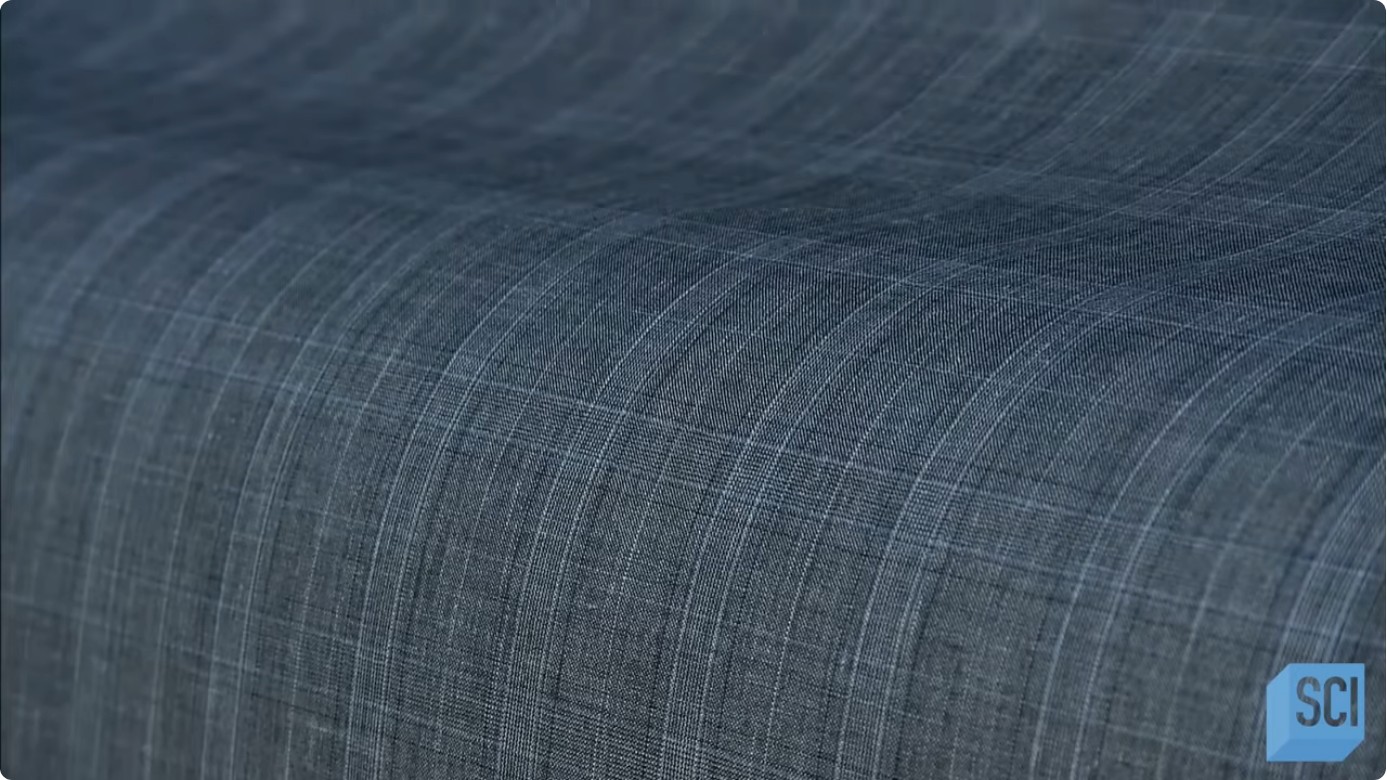
Buyers often arrive at terry having considered other knits. The distinctions below are the ones that matter in specification.
| Construction | Face surface | Bulk source | Warmth | Drying speed | Typical use |
|---|---|---|---|---|---|
| French terry | Visible loops | Pile on a single ground | High | Slow | Sweatshirts, hoodies, towels |
| Jersey | Flat, smooth | Ground only | Low | Fast | Tees, lining, layering |
| Interlock | Flat, smooth | Two knitted faces | Medium | Medium | Premium tees, activewear |
| Fleece | Brushed surface | Brushed fibre on knit | Very high | Slow | Sweatshirts, blankets, warmwear |
| Sherpa | Dense pile, often curly | High pile on knit or woven | Very high | Slow | Winter jackets, hoodies, blankets |
| Pique | Raised textured pattern | Double knit | Low | Fast | Polo shirts, collars |
| Blend | Typical Composition | Resulting Characteristics | Common Use |
|---|---|---|---|
| 100% Cotton | 100% Cotton (often ring-spun or combed) | Natural, breathable, soft hand. Can shrink more. Traditional feel. | Premium basics, loungewear, eco-conscious lines (if organic). |
| Cotton/Polyester | 60/40, 80/20, or 50/50 blends | Improved durability, wrinkle resistance, colorfastness, and reduced shrinkage. Often more affordable. | Mass-market hoodies, team uniforms, everyday activewear. |
| Cotton/Rayon (or Modal/Lyocell) | Typically 60/40 or 70/30 | Incredibly soft, drapey hand. Enhanced moisture management. More luxurious feel than poly blends. | Luxury loungewear, high-end basics, drapey silhouettes. |
| Synthetic-Dominant | Polyester/Spandex or Nylon/Spandex | Maximum stretch, moisture-wicking, quick-drying, shape retention. Less natural feel. | Performance activewear, athletic layers, travel apparel. |
Three constructions come up constantly as alternatives, and the choice usually turns on whether you want visible loop texture, brushed warmth, or a smooth surface with recovery. Our interlock guide covers the smooth double-knit option, and our fleece guide covers the brushed alternative.
If you would rather have us recommend it, send us the end use and target weight and we will tell you which construction to use.
Two distinctions in the above table are worth drawing out, because they are the ones that come up most often in specification conversations.
| Feature | French Terry | Fleece | Jersey | Terry Cloth (Woven) |
|---|---|---|---|---|
| Construction | Weft knit with uncut loops on back | Weft knit with cut loops (sheared) on back | Smooth weft knit, no loops | Woven fabric with extra weft yarns forming loops on one or both sides |
| Back Texture | Looped, textured | Napped, plush, fuzzy | Smooth | Very prominent, absorbent loops |
| Breathability | Good (due to air pockets in loops) | Poor to Fair (napping compresses structure) | Excellent (thin, open structure) | Good (loop structure allows air) |
| Warmth | Moderate (traps air in loops) | High (dense nap insulates well) | Low (thin) | High (thick, looped) |
| Stretch | Good 2-way or 4-way (if blended with Lycra/Spandex) | Good 2-way | Excellent 2-way | Very Limited (woven) |
| Typical Use | Sweatshirts, hoodies, loungewear, casual dresses | Fleece jackets, blankets, cold-weather layers | T-shirts, underwear, dresses | Bath towels, beachwear, robes |
The practical takeaway: if the loop is not wanted in the final appearance, terry is the wrong choice. Fleece gives similar warmth with a brushed face and a different surface character, and a French terry that has been brushed is effectively moving toward fleece with the wrong specification. Decide which of the two you are buying before the fabric is made.
Most buying problems with French terry come from specifying it as “terry fabric” and nothing more. That description permits almost any construction, and a mill can legitimately deliver something quite different from what was imagined. The following points are what a buyer should establish in writing before the order is placed.
Our knitting floor produces French terry from 180–450 gsm, single-face or interlock-backed, in cotton, cotton–poly and performance blends. Send the construction, weight, width and quantity and we will confirm lead time and whether a development slot is needed.
Three checks catch most specification failures at goods-in, and all three take minutes.
First, check the weight against the stated GSM on a calibrated balance, sampling several points across the roll. A fabric delivered well under the stated weight will not recover the loft it was specified for.
Second, measure the valid cuttable width under light tension, not the overall width. A difference of more than about 12 cm between stated overall width and measured valid width is a red flag worth raising at goods-in rather than discovering at the cutting table.
Third, press a swatch and observe the recovery. Compress the face firmly, release it and let it sit. A fabric with a well-anchored loop recovers within a minute or two. One that stays compressed will look flattened after a small number of wash cycles, whatever the fibre content claims.
Two things routinely move between an approved sample and the production roll. Shrinkage increases with bulk processing because the fabric is relaxed in bulk dyeing and finishing rather than in a single sample batch. Hand feel can shift if the loop is sheared or brushed slightly differently, or if the pile yarn is substituted with a visually similar but different blend.
Both are managed by specification rather than by inspection alone: state the shrinkage tolerance and the finishing route in the order, and confirm the finishing route on a pre-production sample before the bulk dye lot is released.
For guidance on the specification points above, or for a quote against a particular construction, tell us the end use, target weight and width and we will come back with what we can actually run.
French terry ages well if handled properly and ages badly if it is not, and most of the difference comes from heat rather than detergent.
Wash at 30–40°C. A high-temperature cycle sets any residual relaxation permanently, which is why a fabric that measures within tolerance at the mill can still shrink noticeably after the first domestic wash. Cold or cool cycles preserve the loop and the fit.
Wash inside out where the loop is brushed or peached. The raised surface abrades against the garment’s interior. Turning it inside out materially reduces the wear on the face over repeated cycles.
Avoid high tumble heat. Tumble drying is the main cause of loop compression and the flattened appearance buyers report as quality decline. Air drying flat preserves the loft.
Do not use fabric softener on the pile. Softener coats the fibre and reduces its absorbency over time. It will make the fabric feel better immediately and perform worse after several washes, which is the wrong trade for a towel or a bathrobe.
Expect the loft to compress with use and recover on drying. A high-quality terry will flatten under wear and lift back as the garment dries. That behaviour is the correct test of loop quality. A fabric that stays flat after drying has a poor loop anchor, regardless of what the specification sheet says.
For the fibre and finishing detail behind these points, our guide to cotton French terry goes deeper, and the warm-weather considerations cover the seasonal question specifically.
French terry uses an open-spun yarn and produces a visible, soft loop at moderate density, which leaves the surface texture readable and the handle matte. Cotton terry more often refers to fibre content than a construction, and fabrics labelled cotton terry may be French terry construction, Chinese terry construction, or a plain flat knit that is simply described as terry. The reliable check is whether the face has visible loops and whether the back is flat.
Terry cloth is the broader family; French terry is a specific type within it, distinguished by yarn character and loop appearance. The two terms are often used interchangeably in sourcing, so it is worth clarifying in writing: if the specification says terry cloth and the mill quotes Chinese terry construction, the sample will feel denser and less textured.
Almost always a cotton or cotton-blend fibre in a weft knit with a raised loop. The common specifications are 100% cotton French terry cotton fabric for premium and skin-contact uses, and cotton/polyester blends where fast drying and repeated laundering matter. The ground and the pile are frequently different fibres, so both should be stated. Bamboo, lyocell and viscose blends are used where a smoother, silkier hand is wanted, at a lower wet strength and a higher price.
The three dominant uses are sweatshirts and hoodies, bath towels and robes, and loungewear. The reason is the combination of warmth from the loop, moisture handling along the yarn, and a soft hand next to the skin. It is also used for lining and layering panels, and for baby and childrenswear where softness and absorbency are the priority. Our knit terry structure guide covers the construction side in detail.
Yes, and more than flat knits of equivalent weight, because the pile adds surface area and the loops are not tensioned by the ground structure. A tolerance of 3–5% is normal, higher than a flat jersey. The test method should be specified, and the fabric should be washed at 30–40°C rather than hot to keep shrinkage within the stated figure.
240–280 gsm with a 1.8–2.5 mm pile is the most common specification for a mid-weight sweatshirt. Below 200 gsm it becomes a lightweight top that dries fast but feels thin; above 320 gsm it becomes a hoodie-weight fabric. Specify pile height and construction alongside the weight, because GSM alone will not tell you how the garment will feel.
Less than fleece or brushed fabrics, because the loops are anchored into the ground rather than sitting on it. What buyers call pilling is usually loop compression rather than fibre pilling — a denser loop, a higher-twist pile yarn, or a double-face construction all improve recovery.
Yes, on a polyester or polyester-rich ground — the dye bonds to the fibre rather than sitting on the surface, so the print will not crack as the garment flexes. On a cotton ground it will not perform well without a primer, so print-heavy programs should specify a TC or polyester ground.
It is the standard construction for bath towels and robes, but the specification changes. Towels need 350–450 gsm with a 3.0 mm or taller pile and dense loops for absorbency. Bath mats need a heavier ground and a dense pile, and usually a backing for stability. The lightweight 240 gsm terry used for sweatshirts will not perform as a towel.
French terry has visible loops on the face and a flat back; fleece has a raised, brushed fibre surface on the face and a soft, fuzzy back. Fleece is warmer and softer, terry is more structured and dries faster, and terry keeps its loop appearance over more wash cycles. They are substitutes for warmth but not for appearance or function. Our fleece selection guide covers where fleece is the better choice.
Six items: construction (single face or double face), total weight and pile height stated separately, valid cuttable width, ground and pile fibre content separately, finish (loop, brushed or sheared), and shrinkage tolerance with the test method named. That set removes most of the ambiguity that causes a sample to be rejected on arrival. Our bulk sourcing guide for French terry works through each item with the questions to ask.
It depends on the construction and the finishing route. A single-face terry in a stock fibre is the most flexible; a double-face terry with a custom blend and shearing is the most restrictive. Rather than guess, send the end use, target weight, width and quantity and we will confirm what is practical — send us your requirements and we will reply with what is possible.
Tell us the construction, target GSM, width, quantity and finishing route you need, and we will reply with pricing, minimum order quantity and lead time. If your specification is still open, send what you know and we will tell you what is worth fixing first.
Reviewed by the knitting floor team at Shaoxing Keqiao Lianyang Fabric Co., Ltd (Pura Fabric) — a weft-knit fabric manufacturer established in 2010 in Keqiao, Shaoxing, Zhejiang, China. Send us your construction, target GSM, width and quantity and we will confirm what is runnable and quote within 12 hours.

[…] French Terry Fabric: Types, GSM & Sourcing […]
[…] French Terry Fabric: Types, GSM & Sourcing […]