Address
304 North Cardinal
St. Dorchester Center, MA 02124
Work Hours
Monday to Friday: 7AM - 7PM
Weekend: 10AM - 5PM
Address
304 North Cardinal
St. Dorchester Center, MA 02124
Work Hours
Monday to Friday: 7AM - 7PM
Weekend: 10AM - 5PM
If you’ve ever slipped into a pair of leggings that move with you, worn a t-shirt that feels like a second skin, or chosen a dress that doesn’t restrict your motion, you’ve experienced the power of a well-engineered soft stretchy material. This combination of comfort and mobility is no longer a luxury—it’s a baseline expectation for vast categories of modern clothing, from performance activewear to everyday basics. But “soft” and “stretchy” are not a single fabric; they are a performance outcome achieved through a precise marriage of fiber choice, yarn structure, and fabric construction. Understanding this triad is the key to selecting the right material for your project, whether you’re a small brand developer, a sourcing manager, or a DIY enthusiast.
This guide cuts through the vague terminology to explain exactly how softness and stretch are created, maintained, and sometimes compromised. We will break down the most common material systems, compare their real-world trade-offs, and provide actionable considerations for sourcing and care, ensuring your final product performs as intended.
At its core, achieving both properties requires two things: a fiber with inherent elasticity (or a very flexible non-elastic fiber) and a fabric structure that allows for extension and recovery. The “soft” hand is primarily a function of fiber diameter (finer is softer), surface texture (smooth vs. hairy), and the fabric’s final finish. The “stretch” is a function of the fiber’s elastic modulus and the fabric’s construction, which can provide mechanical stretch even without elastane.

A critical distinction exists between inherent stretch (from fibers like rubber or spandex) and mechanical stretch (from the fabric’s knit loop structure). A fine cotton jersey has mechanical stretch due to its looped knit construction, giving it comfort and drape, but it lacks high recovery and will bag out over time. A rigid polyester woven fabric has little stretch unless interwoven with an elastic yarn. The modern standard for high-performance apparel combines both: a base fiber for softness and aesthetics (like nylon, polyester, or cotton) blended with a small percentage (typically 5-20%) of a synthetic elastomer, most commonly spandex (also known as Lycra® or Elastane).
Let’s examine the most prevalent fabric compositions, moving from simplest to most complex. Each system has a signature feel, performance profile, and cost tier.
These fabrics achieve comfort and mild stretch solely through their knit structure, with no added elastic fibers. They are the foundation of casual wear.
This is the powerhouse of the performance and modern basics world. A small percentage of spandex (the brand name Lycra® is a type of spandex) is plated, covered, or spun into a yarn with a primary fiber. The spandex filament provides the stretch and recovery, while the primary fiber dictates softness, opacity, moisture management, and durability.
| Primary Fiber Blend | Typical Stretch & Recovery | Softness & Hand | Key Strengths | Primary Weaknesses |
|---|---|---|---|---|
| Nylon/Spandex (e.g., 80/20 or 85/15) | Excellent (20-30% stretch, high recovery) | Very soft, smooth, silky | Durable, abrasion-resistant, excellent moisture wicking, quick-drying | Can generate static, sensitive to high heat (melts), prone to pilling in lower-denier versions |
| Polyester/Spandex | Excellent to Very Good | Can be soft, but can feel plasticky if low-quality | Extremely durable, colorfast, UV resistant, low shrinkage, cost-effective | Less breathable than nylon, can feel clammy, hydrophobic (resists moisture absorption) |
| Polyester/Nylon/Spandex (Tri-blend) | Excellent | Very soft, balances properties | Combines durability of nylon with cost/stability of polyester; excellent moisture management | Complex sourcing, can be harder to dye uniformly |
| Cotton/Spandex (e.g., 95/5 or 97/3) | Good (15-20% stretch) | Very familiar, “cottony” soft | Natural feel, breathable, comfortable, good for casual fitted wear | Poor moisture wicking (stays wet), stretches out over time, less durable than synthetics, higher shrinkage |
Note: Stretch percentages are approximate and vary by fabric weight (denier/gsm) and knit structure.
These materials push boundaries in specific areas like extreme softness, temperature regulation, or sustainability.
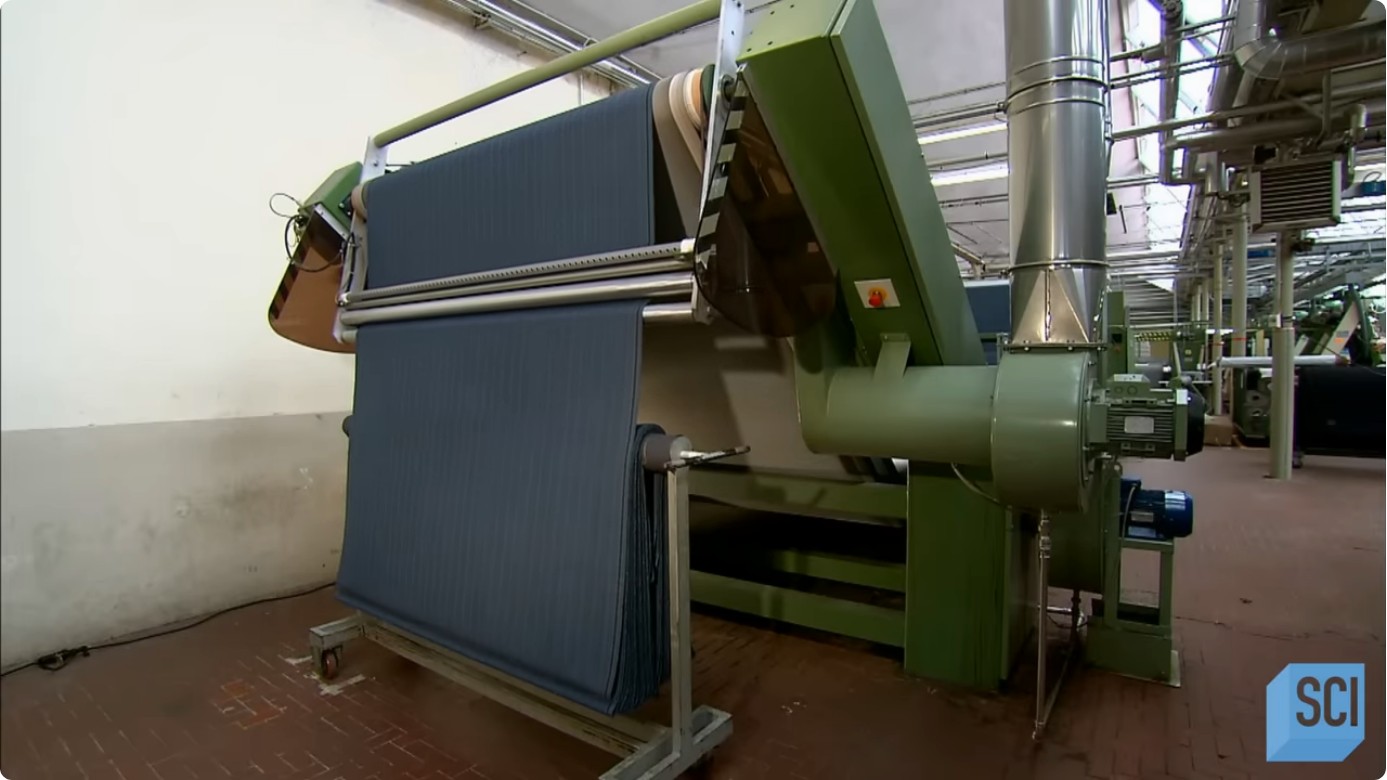
Beyond fiber content, the fabric structure is half the equation. A 20% spandex blend in a rigid woven canvas will have almost no stretch because the spandex yarn is locked in place by the tight over-and-under weave. That same blend in a knit will exhibit significant stretch because the loops can open and close.
Selecting the right fabric is a series of trade-offs. Use this checklist when evaluating a sample or spec sheet.
Every soft stretch fabric has a weakness. Your job is to manage it through design and care instructions.
What is the most durable soft stretch fabric for high-intensity training?
A tightly knitted, mid-to-high weight (240-280 GSM) nylon/spandex blend, preferably with a recycled nylon content for sustainability, is the industry standard. Look for fabrics with a “power mesh” or “compression” designation and a smooth, tight face to resist abrasion from surfaces or other clothing.
Can I get a soft stretch fabric that is also eco-friendly?
Yes. The primary options are blends using Tencel™ Lyocell or Modal with spandex, and fabrics made with recycled polyester (rPET) or recycled nylon (like ECONYL®). The softness of Tencel™/spandex is exceptional. Be sure to verify the sourcing claims through certifications like Textile Exchange standards for recycled content.
Why does my cheap spandex blend feel plasticky and not soft?
Softness is largely determined by the primary fiber and the fabric’s finish. A low-cost 100% polyester/spandex fabric will feel synthetic because the polyester fibers are thick and the fabric may be unbrushed. For softness, you need finer fibers (like 70-denier nylon), a brushed or napped finish, or a more inherently soft fiber like modal or Tencel™ blended with a smaller percentage of spandex.
Is a 4-way stretch always better than 2-way stretch?
Not necessarily. 4-way stretch provides freedom of movement in all directions but can sacrifice stability and support. A 2-way stretch woven, for example, provides stretch across the body (for ease of dressing) but maintains structure and a clean hang in the lengthwise direction, which is desirable for many tailored pieces. Choose based on the garment’s functional need.




