Address
304 North Cardinal
St. Dorchester Center, MA 02124
Work Hours
Monday to Friday: 7AM - 7PM
Weekend: 10AM - 5PM
Address
304 North Cardinal
St. Dorchester Center, MA 02124
Work Hours
Monday to Friday: 7AM - 7PM
Weekend: 10AM - 5PM
When you shop for a sweatshirt, the label “cotton” is often treated as a blanket statement for comfort. But “cotton sweatshirt material” is not a single, uniform fabric. It’s a category defined by a critical balance of fiber content, fabric weight, and knitting technique. Understanding these variables is the key to finding a sweatshirt that performs for its intended use—whether that’s layering for a crisp fall morning, surviving intense gym sessions, or holding its shape after years of washes. Misunderstanding this can lead to garments that shrink excessively, pill quickly, or simply don’t feel as expected.
This guide deconstructs what makes a sweatshirt fabric “cotton,” moving beyond the marketing to the technical details that dictate real-world performance. We will clarify the prevalence of blends, decode fabric weights like 10-ounce fleece, and explain how loopwheeled construction differs from standard knitting. By the end, you will be able to read a fabric spec with confidence and select the right material for your needs, whether you are a consumer, a brand buyer, or a maker.
Before diving into specifics, frame your decision around these three non-negotiable factors. They are interdependent; changing one affects the others.
Related guide: The Complete Guide to One Piece Bathing Suit Fabric Patterns: From Design to Performance
The term “cotton sweatshirt” is often used loosely. In reality, most sweatshirts on the market are blends. Here’s the breakdown of common compositions and their real implications.
This is the classic, natural choice. It is highly breathable, comfortable against sensitive skin, and biodegradable. However, it comes with significant tradeoffs:
Scenario: Ideal for casual, low-activity wear in moderate climates. A 100% cotton, loopwheeled sweatshirt from a heritage Japanese mill is a prime example where purity is prized for its hand-feel and minimal pilling.
This is the workhorse blend for everything from athletic wear to everyday basics. The polyester component dramatically alters the fabric’s behavior:
Tradeoff: You sacrifice some of cotton’s natural breathability and soft “lived-in” feel. The fabric can feel slightly warmer and less breathable in high heat/humidity.
You may also see:
Weight is the single biggest indicator of a sweatshirt’s warmth, durability, and seasonality. It’s measured in ounces per square yard (common in US) or grams per square meter (gsm, common globally).
| Weight Category | Typical GSM / Oz | Characteristics & Best Use |
|---|---|---|
| Lightweight | 200-280 gsm / 6-8 oz | Thin, breathable, great for layering or mild climates. Often French terry ( Terry on one side, smooth on the other). Can be semi-sheer. |
| Mid-Weight | 280-350 gsm / 9-12 oz | The most versatile “classic” sweatshirt weight. Good balance of warmth and breathability. Common for both casual and light athletic use. |
| Heavyweight | 350+ gsm / 13+ oz | Thick, dense, very warm. Often double-knit fleece. Exceptional durability and structure. Ideal for cold weather, workwear, or premium heavy fleece. |
Note on French Terry vs. Fleece: French terry has a looped, terrycloth-like underside and a smooth outer face. It’s mid-weight, breathable, and has a classic sweatshirt feel. Fleece has the loops sheared off, creating a soft, fuzzy pile on both sides (or one side, for “single-sided fleece”). Sheared fleece is warmer, softer, and more insulating but less breathable than French terry.
Two sweatshirts with identical fiber content and weight can feel and perform differently based on how they’re made.
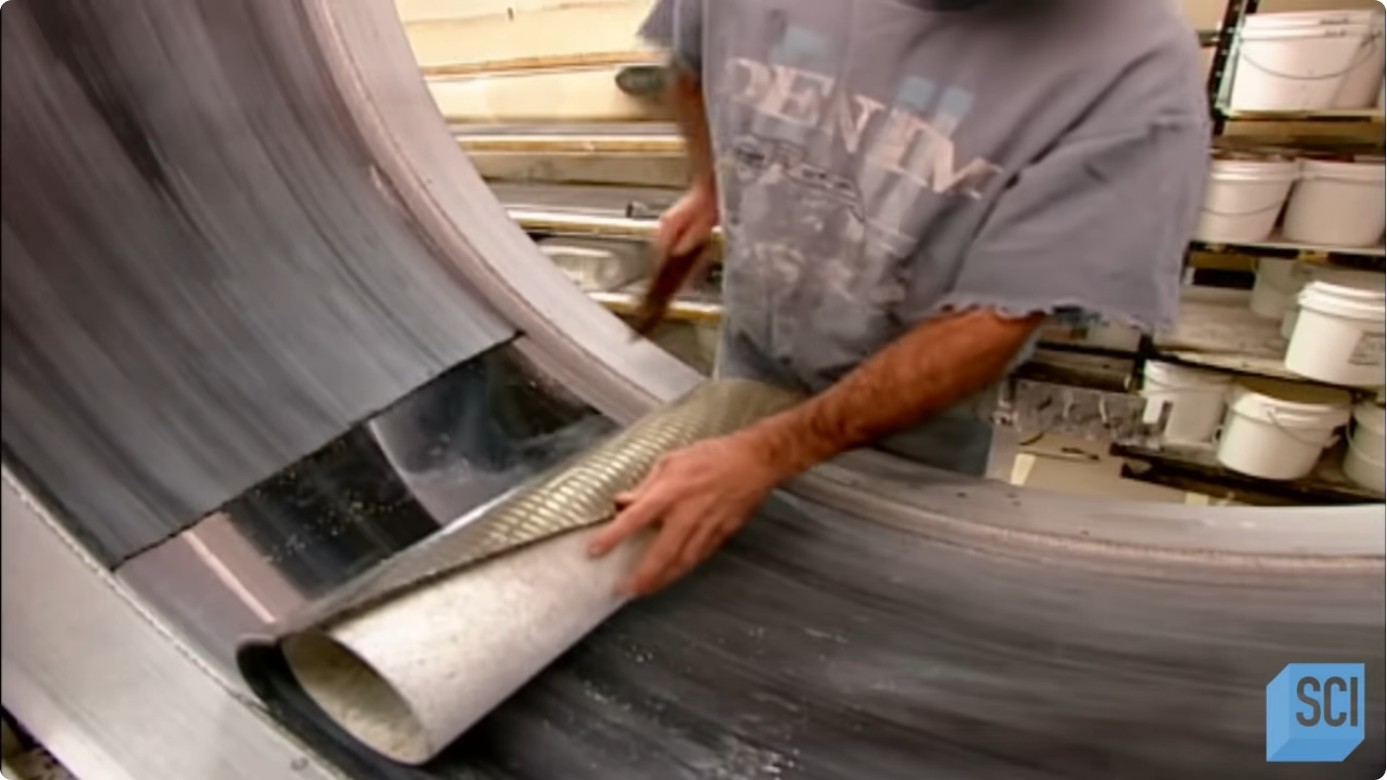
Loopwheeled knitting is a slower, older method where the fabric is knitted in a tube on a specialized machine. It produces a denser, more consistent, and less tense fabric with less residual stress. This results in:
Standard knitting (often on flat-bed machines) is faster and cheaper. The fabric can have a slightly stiffer, “boardier” hand initially and may relax or warp more with wear. Loopwheeled is a hallmark of premium, heritage-style sweatshirts.
After knitting, the fabric can be mechanically brushed to raise fibers and create a soft, fuzzy surface (like on the inside of a classic fleece). Unbrushed fabric (like French terry’s looped side) is smoother and more breathable. Brushing adds warmth and a cozy feel but can reduce long-term durability and increase pilling potential.
For businesses or serious hobbyists, sourcing the right fabric involves more than just specs.
Reputable suppliers provide detailed technical packs (tech packs) with exact composition (e.g., 80% cotton, 20% polyester), weight (e.g., 320gsm), construction (e.g., 24-gg loopwheeled fleece), and yarn count. Key sourcing hubs include the United States, Italy, Japan, and increasingly, Turkey and Portugal. Always request a physical swatch before committing to a bulk order. Evaluate the swatch for hand-feel, stretch recovery, and edge curling.
If the sweatshirt is for athletic or uniform use, look for specific certifications:
Answer these questions to narrow down the ideal cotton sweatshirt material for your project:
Q: Is organic cotton better for sweatshirts?
Organic cotton removes the pesticide component from farming but does not change the physical properties of the fiber. It will still shrink and hold moisture like conventional cotton. Its benefits are environmental and ethical, not performance-based.
Q: What does “ring-spun cotton” mean on a tag?
Ring-spinning is a yarn-making process that produces a stronger, softer, and more uniform yarn compared to the cheaper open-end method. Ring-spun cotton feels significantly better and pills less. It’s a good indicator of quality, especially in blends.
Q: How do I care for a cotton sweatshirt to maximize life?
Always follow the care label. General rules: Wash cold, tumble dry low or line dry. Avoid high heat which can set shrinkage and damage fibers. For 100% cotton, air-drying is the best way to control shrinkage. For blends, low-heat drying is usually fine. Turn garments inside out to reduce pilling on the outer surface.
Understanding the lexicon of cotton sweatshirt material transforms you from a passive buyer into an informed selector. You move from asking “Is this soft?” to “Is this 320gsm ring-spun, loopwheeled French terry, and what’s the cotton/poly ratio?” That level of specificity is what separates a satisfactory garment from one that truly earns a permanent place in your wardrobe or product line.
You may also like: Polyester with Polyurethane Coating: A Practical Guide to Performance Fabric


