Address
304 North Cardinal
St. Dorchester Center, MA 02124
Work Hours
Monday to Friday: 7AM - 7PM
Weekend: 10AM - 5PM
Address
304 North Cardinal
St. Dorchester Center, MA 02124
Work Hours
Monday to Friday: 7AM - 7PM
Weekend: 10AM - 5PM
When a standard woven or knit fabric isn’t enough to stand up to water, abrasion, or chemicals, manufacturers turn to coatings. Among the most versatile and widely used in the apparel and technical textile world is polyurethane, or PU. A PU coated material is essentially a base fabric—often nylon, polyester, or cotton—that has been bonded with a thin, continuous layer of polyurethane polymer. This transformation turns an ordinary textile into a performance powerhouse, capable of everything from keeping a hiker dry to protecting a factory worker from hazardous splashes. However, not all PU coatings are created equal. The specific formulation, application method, and base fabric dictate whether the end product is a soft, breathable shell for a ski jacket or a rigid, chemical-resistant barrier for industrial coveralls. Navigating this space requires understanding the core mechanics, the critical trade-offs, and the practical sourcing considerations that define a material’s real-world suitability.
This guide cuts through the marketing jargon to explain what PU coated material truly is, how its properties are engineered, where it excels (and where it fails), and what you need to know when selecting or sourcing it for a specific application. We will compare it to its primary competitor, TPU, and provide a framework for making an informed decision based on your project’s non-negotiable requirements.
At its heart, a PU coated fabric is a composite. The performance comes from the synergy between two components:
More advice: Ponte Knit Material: The Structured Stretch Fabric Guide
The coating can be applied in several ways, most commonly through a direct coating process where the PU is spread evenly onto the fabric, or via lamination, where a pre-formed PU film is bonded to the fabric with adhesives or heat. Lamination can offer more consistent film properties but adds complexity and cost.
Before diving deeper, here’s a quick reference for the typical performance profile you can expect from a well-formulated PU coating on a suitable substrate:
| Property | Typical PU Coating Performance | Influencing Factors |
|---|---|---|
| Waterproofness | Excellent. Measured by hydrostatic head (mm). Can range from 1,000mm (light rain) to 20,000mm+ (extreme conditions). | Coating thickness, uniformity, and substrate’s weave density. |
| Breathability | Good to Very Good (for a coated fabric). Allows water vapor (sweat) to escape. | PU chemistry (hydrophilic vs. hydrophobic), coating porosity, and substrate moisture transfer. |
| Abrasion Resistance | Good to Excellent. Significantly higher than uncoated fabric. | Base fabric strength and coating hardness/toughness. |
| Flexibility & Hand | Soft, flexible formulations available. Can mimic the drape of the base fabric. | PU hardness (measured by Shore A scale), coating thickness, and substrate. |
| Chemical Resistance | Moderate to Good against oils, greases, and many chemicals. Not for all aggressive solvents. | Specific PU formulation (ester vs. ether types). Ether-based PUs generally have better hydrolysis and chemical resistance. |
| Durability (Wash Cycles) | Moderate. Can degrade with repeated laundering, especially with harsh detergents or high heat. | Coating adhesion, PU quality, and care instructions. |
Understanding these properties in context is what separates a good material selection from a failed product.
This is the most celebrated—and often misunderstood—duo in performance apparel. A PU coating creates a physical barrier to liquid water. For breathability, it must allow water vapor molecules (smaller than liquid droplets) to pass through. This is achieved in two main ways:
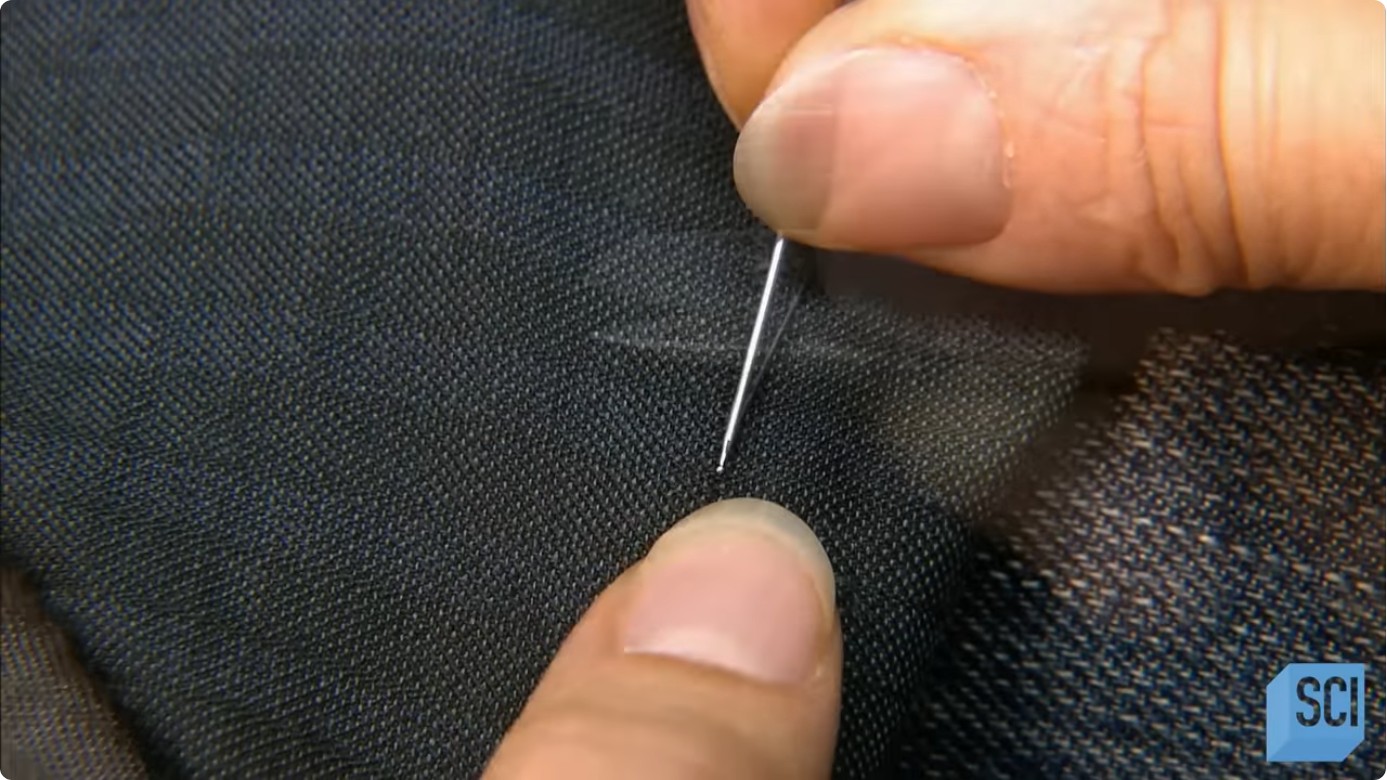
Practical Scenario: For a high-intensity mountaineering shell, you need high breathability (15,000g/m²/24hr+) to vent sweat during exertion. A lightweight, hydrophilic PU on a fine denier nylon mesh might be ideal. For a fisherman’s Bib overalls, waterproofness is the absolute priority, and breathability is a secondary concern. A thicker, more robust coating on a heavy-duty polyester canvas is the better choice, even if it traps more moisture.
The PU coating itself is not particularly abrasion-resistant; it’s the combination that matters. A soft, thin PU on a 70-denier nylon will wear through quickly on a knee pad. A tough, hard-wearing coating on a 1000-denier Cordura® nylon will last for years. Always consider the end-use stress points. Will the fabric rub against rock, concrete, or a saddle? The substrate’s denier, weave type (e.g., ripstop), and tensile strength are just as important as the coating’s toughness.
The most common point of confusion is between Polyurethane (PU) and Thermoplastic Polyurethane (TPU). Both are polyurethane-based, but their processing and properties differ significantly.
| Feature | PU (Polyurethane) Coating | TPU (Thermoplastic Polyurethane) Film/Laminate |
|---|---|---|
| Processing | Thermoset. Liquid applied and chemically cured (cross-linked). Cannot be melted and re-formed. | Thermoplastic. Processed as a solid film and laminated via heat/pressure. Can be re-melted. |
| Softness & Hand | Can be engineered very soft. Often has a more fabric-like drape. | Can be soft but often has a slightly rubbery, plastic feel. Less fabric-like drape. |
| Abrasion & Flex Fatigue | Good abrasion resistance. Can be prone to cracking with repeated flexing if not formulated well. | Excellent flex fatigue resistance and toughness. Very resistant to cracking on fold lines. |
| Chemical Resistance | Moderate. Ester-based PUs can hydrolyze (degrade with water/heat). Ether-based are better. | Generally superior chemical and hydrolysis resistance, especially ether-based TPUs. |
| Cost & Application | Typically lower cost. Coating process allows for very thin, lightweight applications. | Higher material and processing cost. Favored for heavy-duty, high-stress applications. |
| Common Uses | Fashion outerwear, lightweight rainwear, bags, medical textiles. | Industrial workwear, heavy-duty covers, inflatable products, high-flex applications like gaiters. |
Decision Point: If your product requires extreme flexing (like a foldable wallet or a joint-heavy workwear pant) or exposure to harsh chemicals/prolonged moisture, TPU is often the safer, more durable bet. For lightweight, soft, and cost-sensitive apparel where a fabric hand is paramount, a high-quality PU coating is usually the superior choice.
PU coated fabrics are everywhere, but their selection is rarely arbitrary.
Where It Struggles: PU coatings can degrade under prolonged, intense UV exposure (though UV-stable grades exist). They are also generally not suitable for high-heat environments (e.g., welding, fire proximity) where a ceramic or silica-based coating would be needed. They can also be damaged by certain solvents and dry-cleaning chemicals.
Related guide: What is Nylon Used For? A Practical Guide to the World’s Most Versatile Synthetic Fiber
Whether you’re a designer, a product developer, or a small brand owner, asking these questions will prevent costly mistakes.
This is a complex and evolving area. Traditional PU coatings rely on diisocyanates in their production, which have a significant carbon footprint. Furthermore, solvent-based PU coatings release volatile organic compounds (VOCs) unless carefully managed, though water-based PU systems have dramatically reduced this impact.
The bigger challenge is end-of-life. PU coatings are thermosets, meaning they cannot be melted down and re-extruded like a PET bottle. This complicates recycling. A PU coated fabric cannot be recycled in a standard textile recycling stream that handles pure polyester or nylon. Research into bio-based polyols (replacing petroleum-based ones) and chemical recycling processes for PU is active but not yet scalable for mainstream apparel.
For Sourcing: If sustainability is a key brand pillar, you must ask specific questions:
Be wary of vague “eco-friendly” claims. Concrete data on bio-content and manufacturing processes is necessary.
The devil is in the details with coated fabrics. A common mistake is optimizing for one property at the catastrophic expense of another. For example, maximizing waterproofness by applying a thick, hard coating will almost certainly destroy breathability and make the fabric stiff and crinkly.
Another is misunderstanding “waterproof”. A fabric may be waterproof when new but become permeable if the coating delaminates from the substrate due to poor adhesion or abusive care. Always request adhesion test data (e.g., ASTM D1876 – T-peel test).
Finally, prototype rigorously. The only way to know if a PU coated material works for your specific product is to cut, sew, wash, and abuse samples in a way that simulates real-world use. Test the seams—the weakest point in any waterproof garment. A perfect fabric is useless if your seam tape fails.
Choosing the right PU coated material involves balancing a matrix of technical specs, cost, and intended lifespan. Are you building a lightweight travel jacket where packability and soft hand are key? Or a rugged industrial apron where chemical resistance and extreme durability are non-negotiable? The answers to these questions point to entirely different constructions within the broad category of “PU coated.” Start by clearly defining your top three performance requirements, then engage suppliers with those specific parameters. Don’t just ask for “waterproof fabric”—ask for “a 3-layer laminate with a hydrophilic PU coating on a 20D ripstop nylon, with a minimum hydrostatic head of 10,000mm and MVTR of 10,000g/m²/24hr, and a minimum order quantity of 500 meters.” That level of specificity is what turns a generic material inquiry into a successful product development conversation.
Helpful tip: French Terry Material: A Practical Guide to Construction, Uses, and Sourcing