Address
304 North Cardinal
St. Dorchester Center, MA 02124
Work Hours
Monday to Friday: 7AM - 7PM
Weekend: 10AM - 5PM
Address
304 North Cardinal
St. Dorchester Center, MA 02124
Work Hours
Monday to Friday: 7AM - 7PM
Weekend: 10AM - 5PM
If you’ve ever worn a pair of sleek, tailored pants that feel like jeans but move like yoga pants, or a dress that holds its shape without feeling stiff, you’ve likely encountered ponte knit fabric. It’s the unsung hero of modern apparel, offering a rare combination of structure, comfort, and versatility that bridges the gap between woven tailoring and knit comfort. But what exactly is ponte, and when should you choose it over other double knits or stable stretch fabrics? This guide cuts through the confusion, breaking down ponte’s construction, its practical pros and cons, and how to source and care for it effectively for your next project or product line.
Understanding ponte is key for designers, sewists, and sourcing professionals looking for a fabric that performs. It’s not just another polyester-spandex blend; its unique double-knit construction gives it a firm hand and excellent recovery, making it suitable for everything from professional separates to structured activewear. We’ll explore what makes it distinct, where it shines, and where it might fall short, ensuring you can make informed decisions whether you’re buying by the yard or placing a wholesale order.
Ponte, often called “ponte di roma” or simply “double knit,” is a warp-knit fabric. Unlike weft knits (like jersey) where loops run horizontally, warp knits have yarns that run vertically, interlocking with multiple needle beds. Ponte specifically is a double-faced warp knit, meaning it has two distinct, stable layers of fabric interwoven together. This creates a fabric that is identical on both sides—there’s no “wrong” side—and inherently stable.
Also read: Understanding Stretch Knit Material: Properties, Applications, and Sourcing
The typical composition is a blend of synthetic fibers, most commonly polyester and rayon (or viscose), with a small percentage of spandex (usually 5-10%) for stretch. The rayon or cotton component provides absorbency and a softer drape, while the polyester offers durability, wrinkle resistance, and stability. The spandex is the key to its comfortable stretch and recovery.
The terms “ponte,” “scuba,” and “double-knit” are often used interchangeably in retail, but there are meaningful technical differences that affect performance and feel.
| Feature | Ponte Knit | Scuba Knit | Standard Double-Knit |
|---|---|---|---|
| Construction | Double-faced warp knit; fine, smooth yarns | Heavyweight double-faced warp knit; often with a foam-like or spongy texture | Broad category; can be warp or weft; ponte is a type of double-knit |
| Weight & Hand | Medium to heavy; firm, smooth, substantial | Very heavy; thick, bulky, with a pronounced “cushion” | Varies widely; can be light (like milanese) or heavy |
| Stretch & Recovery | Good 2-way or 4-way stretch with excellent recovery | Moderate stretch, less recovery than ponte due to thickness | Varies; Ponte is known for superior recovery |
| Common Use | Dresses, pants, blazers, skirts, structured tops | Wetsuits, costume elements, very structured garments | Ponte, milanese, interlock—all fall under this umbrella |
Bottom Line: All ponte is a double-knit, but not all double-knits are ponte. Scuba is a heavyweight, bulky subset. For tailored apparel, standard ponte is the go-to for its balance of firmness and stretch.
When evaluating ponte, focus on these core characteristics, as they directly dictate its suitability for different garment types.
This is ponte’s superpower. The double-knit construction minimizes curling and provides dimensional stability. A ponte blazer will hold its lapel shape; ponte trousers won’t bag at the knees after a day of wear. This makes it exceptional for:
The spandex content provides functional stretch (usually 15-25% in the width). However, the recovery is what matters most. Good recovery means the fabric snaps back to its original dimensions after movement or laundering. Poor recovery leads to a stretched-out, permanent baggy look. Always check the fabric’s recovery by stretching a sample and releasing it—it should return almost immediately.
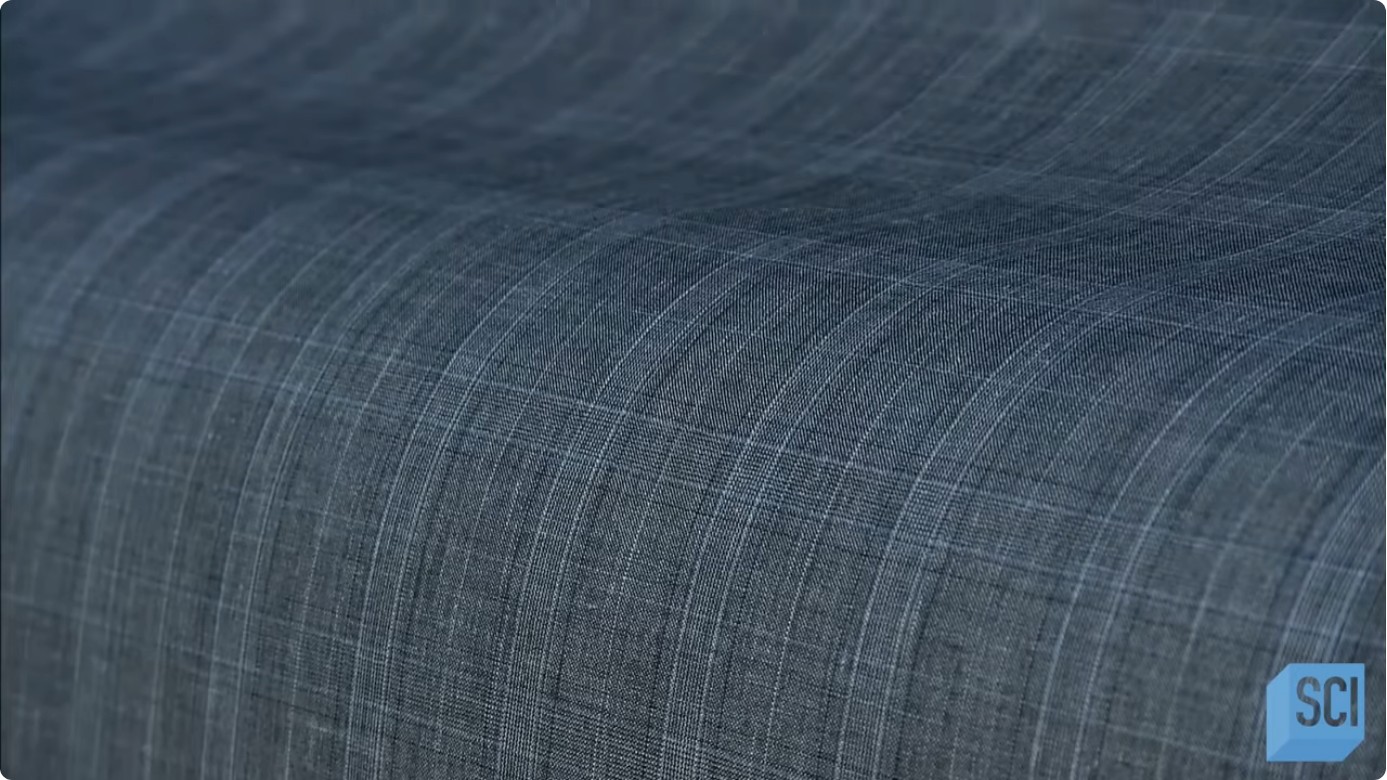
Ponte has a moderate drape—it’s not fluid like silk charmeuse, nor stiff like canvas. It falls with a slight weightiness, skimming the body without clinging excessively. The hand is smooth and substantial, often described as “meaty” or “stable.” This quality makes it appropriate for both professional and casual wear, depending on the garment’s cut.
Here lies a significant trade-off. The dense, double-knit structure and synthetic fiber base (polyester) create a fabric with low breathability. It traps body heat and moisture. While rayon content adds some moisture-wicking compared to 100% polyester, ponte is not ideal for high-heat environments or intense cardio workouts. It’s best for moderate climates, air-conditioned spaces, or as a top layer.
Its unique profile makes ponte a favorite in specific categories. Choosing the right weight (measured in GSM—grams per square meter) is critical.
More advice: Stretch Knit Fabric by the Yard: A Practical Buyer’s Guide
For example, a designer creating a line of “commuter pants” would specify a mid-weight ponte with 10% spandex. The goal is a pant that looks like slim-fit wool trousers but feels like loungewear, surviving a train ride and office chair without wrinkling or stretching out.
Whether you’re a small brand or an individual maker, sourcing quality ponte involves asking the right questions and verifying specifics.
For wholesale quantities (typically 50+ yards), direct mill relationships or B2B textile platforms are key. Look for suppliers that specialize in warp knits. For smaller projects, digital fabric retailers often carry ponte, but quality can vary wildly. Always order a swatch. Feel for uneven texture, check for runs or pulls, and perform your own stretch test. A good resource for understanding textile standards and testing methods is the ASTM International textile standards, which define testing procedures for properties like stretch and durability.
Ponte is relatively low-maintenance, but improper care can degrade its signature stretch and recovery.
Quick Care Checklist:
The biggest threat to ponte is overheating. Dry cleaners who use excessive steam or high-temperature presses can ruin the fabric’s elasticity. If you must dry clean, specify a low-heat press. For home sewists, this is a crucial point to communicate to clients if they are producing garments for sale.
Ponte knit is a powerhouse fabric when used correctly. Its stability and comfort make it a perennial favorite, but it’s not a universal solution. The decision to use ponte should be guided by the garment’s required silhouette (structured vs. fluid), the wearer’s climate (cool vs. hot), and the desired maintenance level.
Before committing, ask yourself: Is a firm, shape-holding fabric essential for this design? Will the end-user be sitting for long periods (requiring excellent recovery)? Is the intended environment temperature-controlled? If you answer “yes” to these, ponte is likely an excellent choice. If you need maximum breathability for athletic use or a soft, fluid drape for a summer dress, you should explore other options like a lightweight French terry, bamboo jersey, or a single-knit ponte-style fabric.
Ultimately, mastering ponte comes down to understanding its engineered balance—the trade-off between the stability of a woven and the comfort of a knit. By focusing on construction specifics, verifying performance data from suppliers, and respecting its care requirements, you can leverage this versatile fabric to create garments that are both beautifully tailored and comfortably worn.
Related guide: The Essential Guide to Swim Shorts Fabric: Choosing the Right Material for Performance and Comfort




