Address
304 North Cardinal
St. Dorchester Center, MA 02124
Work Hours
Monday to Friday: 7AM - 7PM
Weekend: 10AM - 5PM
Address
304 North Cardinal
St. Dorchester Center, MA 02124
Work Hours
Monday to Friday: 7AM - 7PM
Weekend: 10AM - 5PM
Walk into any t-shirt store or browse casual wear online, and you’ll encounter jersey fabric constantly. But not all jersey is created equal. The label “100 percent cotton jersey” signifies a specific, foundational material that behaves differently from its blended cousins. Understanding this pure form is crucial for designers, small-batch makers, and informed consumers who prioritize feel, breathability, and natural fiber integrity over the wrinkle-resistance and stretch of synthetic mixes. This guide cuts through the ambiguity, detailing exactly what pure cotton jersey is, where it shines, where it struggles, and how to source it wisely for your next project.
We’ll move beyond the generic “it’s soft” description to examine its technical construction, weight implications, and the critical trade-offs you must consider when choosing it over a cotton-polyester blend. Whether you’re sourcing for a wholesale apparel line, selecting fabric for a DIY wardrobe, or simply want to understand what you’re buying, this breakdown provides the practical context needed to make a confident decision.
Jersey is a knit, not a woven, fabric structure. It’s created on a single set of needles, resulting in a smooth, flat face (the “right side”) and a looped, textured back (the “wrong side”). The defining characteristic of 100% cotton jersey is its fiber composition: it contains no synthetic polymers like polyester, nylon, or elastane (spandex/Lycra). Every yarn in the looped structure is carded or combed cotton.
You may also like: Organic Cotton Jersey Knit: A Practical Guide for Designers, Makers, and Buyers
This purity dictates its fundamental behavior. Without synthetic fibers to modify its traits, 100% cotton jersey exhibits the classic properties of cotton—high absorbency, good breathability, hypoallergenic qualities, and a tendency to shrink and wrinkle. Its comfort comes from cotton’s natural moisture-wicking ability (though not as rapid as technical synthetics) and its soft hand, which can vary significantly based on the yarn spin and finishing processes.
Even within 100% cotton, construction matters. The most common is single jersey, which is lightweight, has good drape, and is used for t-shirts and casual tops. The loops are only on one side.
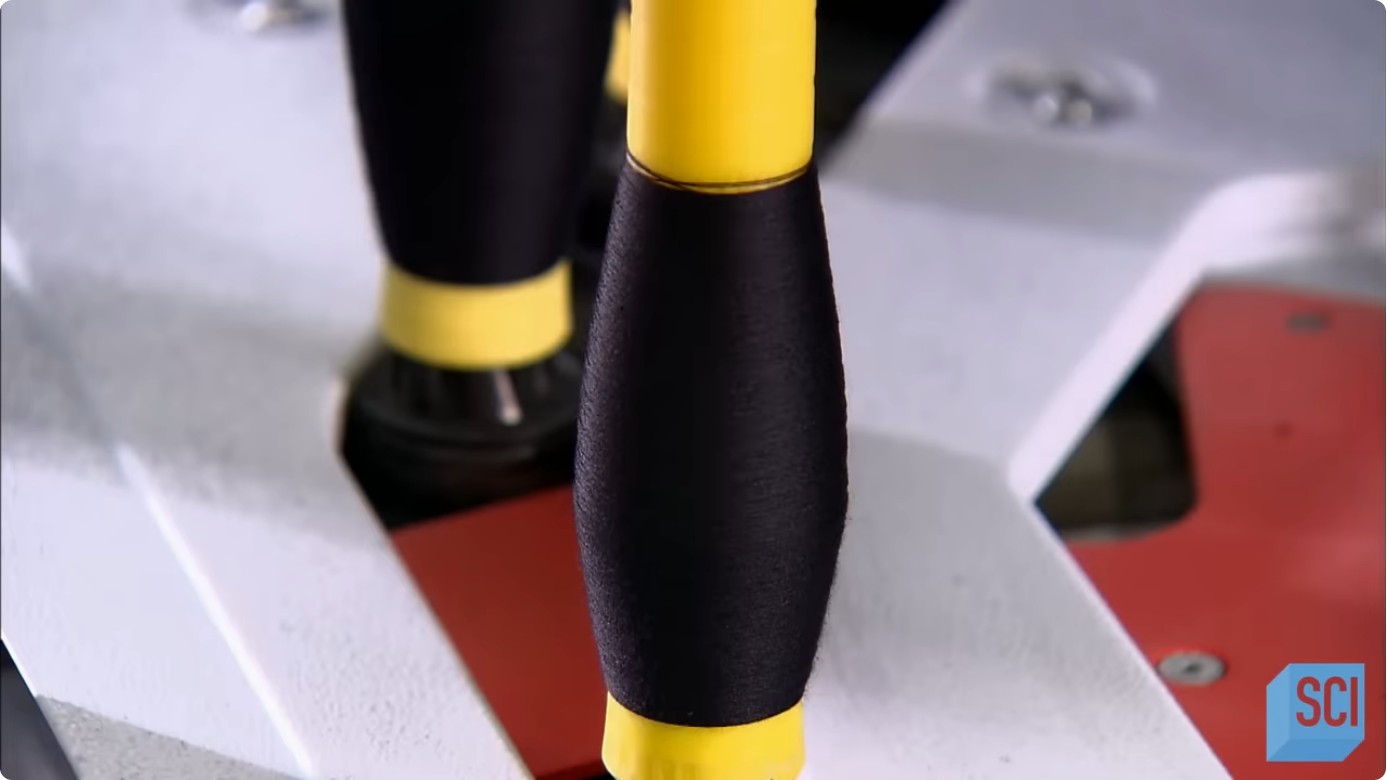
Double jersey, often called French Terry when one side has loops and the other is flat, or Ponte de Roma when both sides are smooth and structured, is made on a double-needle machine. This creates a thicker, more stable, less stretchy fabric that holds its shape better. Your choice here is a primary decision point: single jersey for drape and lightness, double jersey for structure and durability without adding synthetics.
Opting for 100% cotton means embracing a specific set of performance characteristics. There is no “best” fabric, only the best one for the intended use. The following table contrasts the core properties of pure cotton jersey against a typical 65/35 cotton-polyester blend, which is a common industry standard for basics.
| Property | 100% Cotton Jersey | Cotton-Poly Blend (e.g., 65/35) |
|---|---|---|
| Breathability | Excellent. Natural fiber allows air circulation and moisture vapor transmission. | Good to Moderate. Polyester traps more heat and moisture. |
| Moisture Management | High absorbency (soaks sweat), but slower dry time. | Low absorbency (wicks sweat to surface), very fast dry time. |
| Softness / Hand Feel | Can be very soft, especially after washing. “Natural” feel. | Often initially softer due to polyester, but can feel “plasticky” to some. |
| Wrinkle Resistance | Poor. Wrinkles easily and holds creases. | Excellent. Highly wrinkle-resistant. |
| Shrinkage | High, especially if not sanforized. Can shrink 3-7%. | Very Low. Polyester stabilizes the fabric. |
| Durability / Pilling | Prone to pilling over time with abrasion. Fiber can degrade. | High abrasion resistance. Significantly less pilling. |
| Cost (Raw) | Variable. Can be cheaper (commodity cotton) or very expensive (organic/long-staple). | Generally lower cost per yard due to synthetic price. |
| Environmental Profile | Biodegradable. Impact depends entirely on farming practices (water, pesticides). | Non-biodegradable. Derives from fossil fuels. |
This table is your first practical tool. If your priority is a uniform that must look crisp after hours of wear with minimal ironing, 100% cotton is likely the wrong choice. If your priority is a baby’s onesie where skin contact and breathability are paramount, pure cotton becomes the obvious, safer pick.
The fabric’s strengths dictate its ideal uses. Here are the scenarios where its natural properties are a decisive advantage:
GSM is a critical specification often overlooked by novice buyers. It measures fabric density and directly correlates with opacity, drape, and durability.
A 100% cotton jersey at 180 GSM will behave entirely differently from one at 220 GSM. Always specify your target GSM when sourcing.
Finding reliable, consistent 100% cotton jersey requires navigating a few key sourcing channels with your eyes open.
Domestic vs. International Mills: U.S. and European mills often offer higher quality control, smaller minimum order quantities (MOQs) for sample yards, and faster turnaround for small batches. They are ideal for prototyping and small brands. Asian mills (e.g., China, India, Bangladesh) offer significantly lower costs but come with larger MOQs, longer shipping times, and a greater need for rigorous quality assurance. A common strategy is to develop and prototype domestically, then scale production internationally once specifications are locked.
Critical Questions for Suppliers: Never accept a generic “cotton jersey” sample. Insist on clarity for:
Wholesale fabric suppliers, especially in the U.S., often have MOQs of 1 “roll,” which can be 50-100 yards. Smaller designers may need to seek out “sample yardage” services or work with converters who break down larger rolls. Online platforms like Fabric.com (now owned by Amazon) or Mood Fabrics are convenient for low-yardage but are not wholesale sources. True wholesale requires business verification and typically offers better per-yard pricing at higher volumes.

Ignoring the care needs of 100% cotton jersey is the fastest way to a ruined garment. Its limitations are not flaws if managed correctly, but they are non-negotiable realities.
To maximize the life of 100% cotton jersey garments:

Answer these questions to determine if pure cotton jersey aligns with your needs:
If you found yourself answering “Yes” to the first three and “No” to the last four, 100% cotton jersey is likely your ideal fabric. If the “con” column dominates, a well-chosen cotton-polyester blend is a more pragmatic engineering solution.
100% cotton jersey is not a more “basic” version of a performance fabric; it is a different class of material with its own set of virtues and demands. Its beauty lies in its simplicity, its comfort, and its honest connection to a natural resource. By understanding its GSM, its construction (single vs. double), and the absolute necessity of pre-washing, you can harness its qualities to create garments that feel exceptional and perform reliably within their intended scope. The key is to stop viewing it as a poor man’s substitute for a blend, and start seeing it as the deliberate, natural choice it is for a specific segment of the apparel market.
What’s your primary use case for jersey fabric? Are you struggling with shrinkage or seeking the perfect heavyweight organic tee? Your specific project goals will always be the ultimate guide in this material selection.
For further technical specifications, consult the ASTM International standards for textile testing, particularly those related to dimensional stability (D3779) and burst strength (D3782).
More advice: The Fabric Behind the Pattern: A Practical Guide to Red & Black Plaid Textiles


